Sunday, December 19, 2010


Friday, December 17, 2010
Year of the Book #37 HARPER LEE
“In surveys asking what one book every civilized person should read, Mockingbird routinely finishes second to the Bible…”
If To Kill a Mocking Bird were a tree, it would be a “perennial” and for so many reasons.
No matter how many times you have already read it, you can read it again and it is as if you were reading it for the very first time. It doesn’t matter who you are or where you come from – the connection is instant. Scout and Jem and Atticus and even poor Boo Radley are folks we know, not characters in a book. But most of all, it’s a book that is as relevant today as it was 50 years ago when Harper Lee wrote it and as it will be till such time as we learn that there is room enough on this good earth for everyone of us.
“I think there's just one kind of folks. Folks.” Scout
http://www.huffingtonpost.com/matt-litton/to-kill-a-mockingbird-rem_b_790171.html
One of the many joys of doing this series is discovering new things about old favourites. For example, I did not know that Harper Lee was not only a close friend of Truman Capote but that she also helped him in the research of In Cold Blood.
To Kill A Mocking Bird was Harper Lee’s only book. It was enough.
Thursday, December 16, 2010
Year of the Book #36 Dorothy L Sayers
I was in love with “Lord Peter Wimsey” for the longest time. (I guess I still am, in a residual sort of way – it’s a weakness for the British Upstairs folk.) Even when I knew that he held a long-standing candle for oh-so-elegant “Harriet Vane”
Peter Death Bredon Wimsey. Younger son of the 15th Duke of Denver, scion of a family that traces it ancestry to the 12th century.
His “vaguely foolish” face and deliberately cultivated idle-fop-about-town with a Bertie-Wooster IQ level belies a 1st class degree from Oxford, fluency in French & Latin, a penchant for rare medieval manuscripts, vintage cars and wine, a considerable flair at the piano (Bach being a favourite).
The word “sleuth” comes to the lips with difficulty to describe such a man, but that is also what he is – what Hercule Poirot was to Agatha Christie, Peter Wimsey was to Dorothy L Sayer’s enormously successful series of detective novels. It is said that if anyone could dare to compete with Christie’s success, it was Sayers
http://www.openlettersmonthly.com/second-glancedorothy-sayers/
Wednesday, December 15, 2010
Year of the Book Day 35 - John Irving
"Whatever I write, no matter how gray or dark the subject matter, it's still going to be a comic novel." John Irving
When a book or a poem or for that matter, any piece of writing etches itself inside you, what you often remember is not specificities but defining essence, like the memory of a peppercorn bursting in your mouth or the smell of your mother…
So it is with The World According to Garp and Cider House Rules. The residual memory is of a sad sweetness, of landscapes people as damaged and dysfunctional as any of us but never desolate because of Irving’s take on life, which if it wasn’t so funny, would be devastating.
Or “In the world according to Garp, we are all terminal cases.”
http://www.john-irving.com/About_John_Irving.asphttp://www.dailyscript.com/scripts/cider_house_rules.htmlTuesday, December 14, 2010
Year of the Book
You’d think – what would the case histories of a professor of neurology who records have to do with literature? Well, if ever you wanted to read the most fascinating yet the most empathetic chronicling of the human mind on the fringes of what we can “normal”, Oliver Sacks is the man to read.
Sacks himself suffers from prosopagnosia, an inability to recognise faces and places and perhaps we could speculate that it gave him a ringside seat. But I think not. The remarkable quality about his writing is that it is, in many ways, the perfect “beside manner” – the ability to objectively and clinically record the patient’s disease without letting his sympathy for the patient’s suffering come in the way.
Awakenings, Sacks’ book became a bestseller and the inspiration for Harold Pinter’s A Kind of Alaska. (It also became an Oscar winning film starring Robert De Niro 7 Robin Williams, but in my opinion, not a patch on the book.) Many other books followed including The Man who Mistook His Wfe For A Hat and most recently, Musicophilia: Tales of Music, the Brain and The Mind’s Eye (2010).
http://www.newyorker.com/reporting/2010/08/30/100830fa_fact_sackshttp://www.oliversacks.com/
Cow Sense!
They are the most unlovable of my neighbours, and believe you me, that’s a very large breed. And one of their most endearing qualities – and they have many; in fact too many-many-many-many – is the way they dispose off their garbage.
Now the boring rest-of-us park our garbage every morning near our respective gates, which is then neatly collected by the city municipality's garbage collecting squad. Neat, but like i said, boring.
But these neighbours choose to handle their garbage in a manner that is, as the Hindi phillum phrodoocer would say, zaraa hatke. It also showcases their heightened sense of neighbourliness, which while it might not be next to Godliness, is important. (Moses just forget to pencil it in into that Samsung galaxy tablet of his.) So, they first pack their daily load of garbage into a plastic bag, making sure the bag is the flimsiest of flimsy. Then, the tie up the bag and toss it over the compound wall onto the road.
All of which shows an extraordinary amount of the aforementioned neighbourliness because before long, the bag is ripped open by passing stray dogs and the garbage is artistically strewed all over the road. As we are all aware, there is nothing like the sight of freshly rotting garbage first thing in the morning to get those bowels moving. And even better if you slush through a strategically placed piece of banana peel during your morning walk.
But that I’m over the moon about my neighbours is not why I write this.
This morning, it was business as usual. The garbage potli has been flung, properly positioned and waiting. As I muttered angrily under my breath and watered the plants, a cow ambled past me, towards the bag…
Now urban cows are well adjusted to their environment and therefore no stranger to plastic. So, while plastic bags may not be the choice of bovine provender, these cows have found ingenious ways to get past and through them to – alas, to the garbage which they have learnt to “acquire a taste for” . Like the rest of us in the urban world. But this was a plastic bag that was tightly tied up, so I reckoned the cow would just walk past.
But I had not reckoned for a cow as ingenious as this one!
As I watched in fascinatedly, she picked up the bag by one of the handles that had been firmly tied together and with a dexterity that reminded me of a burlesque queen twirling her nipple tassels, Ms Cow began to whirl her head round and round And boom, within a few seconds, the plastic bag burst open and its odiferous innards spewed on to the road.
Fortunately, they weren’t the breakfast she was looking for, because she sniffed, examined and moved on…
My point is this – human intelligence is overrated.
Friday, November 05, 2010
Thursday, November 04, 2010
In Defence of Mud and Oil

Din soona suraj bina
Aur chanda bin raina
Ghar soona deepak bina
Jyoti bi do nain…
Diya jalao, jag-mag jag-mag…K.L Saigal in the film TANSEN (1943)
Well, we did it one more time. When along with the curtains in the drawing room and the silver in the puja room, we laundered and polished and aired out our goodwill and charitableness, tarnished and dusty for a year’s non-use. No, no, don’t worry, I am not going to be Uncle Scrooge and ruin the lovely Diwali that everyone has just had with my grouchy bah and humbug. Instead I write today of a beautiful but perhaps dying Diwali tradition – the humble clay Diwali diya or earthen lamp.
Naturally, at the outset, let me say that I do not have any suitably weighty body of research that says that it will help cure this, that or the other ailment. So I realize that when I sing praises of what is after all a bit of mud, cotton and oil, I compete with that infinitely more snazzy, more convenient, no-mess, no-drip modern day marvel - electric decorative lights. Which not only come on at the mere flick of a switch (and go off as easily) and in so many chak-mak Diwali colours, but can also be made to “pulse” to the latest Jhankar beats. And no spoilsport breeze can ever blow them out. In comparison, my humble diyas are a messy, laborious rigmarole of cotton wicks and oil and the light is in just one boring colour that will tremble and shiver at the mercy of the faintest wisp of a breeze. So, defending the clay diya is like trying to defend the importance of art, dance, poetry and song in the school syllabus. At least in the case of song, there is enough research demonstrating what amazing things that a spot of music can do to your kids’ IQ. So, if not to introduce Munna to the joy of listening to the sweet, aching sound of Talat Mahmood pleading, “Jalte hain jiske liye, teri ankhon diye….”, then at least to boost up his mathematical skills, we will allow him a few music classes. But what “good” will a few silly, mud (oh, alright, clay, if you insist) diyas that we light once a year do for anyone?
Like I said, the dice aren’t loaded in my favour but let me try anyway….
"The Hindu does not worship an idol
Made of wood and clay.
He sees consciousness
Within the earthen-ness
And loses himself in it." Swami Vivekananda
Let me start with mud….er, I mean clay. The association of clay with creation and the circle of life is an ancient and universal one. As swiftly miraculously as it takes form, clay can be and is destroyed. Impermanence, change, regeneration – the cycle of life and its inexorable rhythm is embodied in clay and in the potter’s wheel. Even when it remains unformed in the soil, it is invaluable. It absorbs ammonia and other gases needed for plant growth and helps the soil to retain the fertilizing substances in manure. So, without clay, the womb of Mother Earth cannot hold on to its fertility. And out of a lump of clay can be born anything. A Pongal pot, a roof or floor tile, a Dussera gombe (doll), a kulhar, a Bankura horse. Or an Ayyanar deity, fiercely guarding the entrance of a village in Tamil Nadu. Or the 7500 strong terracotta army of life-size soldiers, horses and chariots that Emperor Qin Shi Huang, China’s first emperor had buried with him more than 2000 years ago. Or the 30,000 clay tablets that formed the library of King Sennacherib of Assyria (now partly in Iraq) who ruled from 704 to 681 B.C. Or the thousands of magnificent statues of Goddess Durga and Lord Ganesh that grace our lives for 10 days every year and then sink into oceans and rivers to become clay again.
Or a little clay diya. Or then, mankind itself….
It is said that Brahma fashioned man out of clay. Which makes him the first potter and so, ever since, potters in many parts of India and Nepal have “Prajapathi” as their family name. And the origin of the first earthen pot is equally sacred. During the sagar manthan or the churning the ocean, when the amrut or nectar finally came up, there was no vessel to collect it in. So Vishwakarma, architect of the gods (he designed Indralok, Dwarka, Lanka, Indraprastha to name only a few divine residences), divine sculptor and supreme craftsman, shaped some earth into a pot or kumbh. (So, the potter is called kumhar in Hindi and Kolkatta’s most famous potter’s colony, where the fabulous Durga statues are made every year for the Durga Puja celebrations is called Kumortoli.) Which is why many potters light a small diya as a mark of respect to the great Viswakarma before they start the day’s work.
And it is more than likely that that diya is a clay one and the oil in it will most likely be….
The Sanskrit generic word for oil is “taila” (Hindi – “tel”), said to have originated from the Sanskrit “tila” or sesame - an indication that sesame or gingelly oil’s status as the first among oils. Nurturer and healer, next only to ghee in its sattvic, calming nature, sesame oil carries in it all the wonderful qualities of its parent seed. It is said that the sesame seed formed when a drop of Vishnu’s sweat fell on the earth and in Ayurveda, it is considered one of the first foods of the earth. And so sesame oil, rated by the great sage Charaka as “shreshta” among oils, is indispensable in Ayurveda, used for everything from seasoning healing foods to treat orthopedic injuries and generally improve and rejuvenate the body’s vital systems. And it is this wonderful oil that is normally used in diyas. Why? Well, many say that the flame of a diya fuelled by ghee or sesame oil purifies the air around it. So, what else would we fill into the lamps that will light our way out of the darkness of all that is bad and sad and troubled into all that is good and happy and peaceful – both inside and outside us? How else would we welcome Goddess Laxmi into our homes but with the brave, beautiful, golden flame of a clay diyas?
Which brings me finally to…..Anjali. A lovely name for a girl and means “offering”. But what does it have to do with the diya? Ah, it is a beautiful connection. Cup both your hands together as we do when we offer something in a puja or when we accept a boon or prasadam. Now look carefully at the shape that your hands have formed. It is exactly the shape of a diya. (In Ayurveda, “anjali” is also the volume that can be held by your two cupped hands.) So, every little clay diya, made from the coming together of fire, water, air, space and sacred earth, filled with the sweet, peaceful, healing goodness of sesame oil that gives itself up so willingly to burn so bright and pure, is an offering, a prayer. In gratitude for life, that we have completed one more circle and ready to embark on another. Invoking all that is good and peaceful and healing and that we may have the power to deal with whatever life has in store for us. Remembering that like the clay of the diya, that everything we are, have, own – the new designation, the freshly Asian-painted house, the newly wed daughter-or-son-in-law, even the brand new 26’ plasma TV bought with the Diwali bonus - is only lent to us for a while. So, enjoy it while it is there and when like the oil in the diya, its time is up, give it back without grief….
So, my dear, dear readers, I hope that this Diwali, the humble little clay diya blessed each one of you and your homes with its simple, beautiful blessing.
Happy Diwali
Wednesday, November 03, 2010
A little about my book...
"
Did you know that a couple of bananas a day could keep your blood pressure down? That nineteenth-century sailors ate potatoes to fight scurvy? That Ayurveda considers rice the perfect healing food? That George Bernard Shaw was a brinjal-loving vegetarian? That turmeric could be an anti-carcinogenic? That urad dal is an aphrodisiac?
Ratna Rajaiah takes a walk down memory lane, only to find it redolent with the aromas of her mother’s and grandmother’s kitchens, and lined with the spices and condiments of her youth. Pausing often, she meets old culinary friends – coconuts and chillies, mangoes and jackfruit, ragi and channa dal, ghee and jaggery, mustard seeds and curry leaves – and introduces us to almost-forgotten joys, like the sight of steaming kanji or the aroma of freshly cut ginger. Taking detours off the beaten path, she shares recipes for old favourites (often with a surprising twist!) and reveals delightful slivers of trivia and fascinating nuggets of gastronomic history.
 Delving deeper, she discovers that traditional fare is much more than comfort food (many local ingredients are health-giving and healing too!) and that much of what the West is discovering about foods as nutritionists and healers has been known to our ancients for centuries. An unabashed and wonderful ode to the blessings of simple, traditional vegetarian foods."
Did you know that a couple of bananas a day could keep your blood pressure down? That nineteenth-century sailors ate potatoes to fight scurvy? That Ayurveda considers rice the perfect healing food? That George Bernard Shaw was a brinjal-loving vegetarian? That turmeric could be an anti-carcinogenic? That urad dal is an aphrodisiac?
Ratna Rajaiah takes a walk down memory lane, only to find it redolent with the aromas of her mother’s and grandmother’s kitchens, and lined with the spices and condiments of her youth. Pausing often, she meets old culinary friends – coconuts and chillies, mangoes and jackfruit, ragi and channa dal, ghee and jaggery, mustard seeds and curry leaves – and introduces us to almost-forgotten joys, like the sight of steaming kanji or the aroma of freshly cut ginger. Taking detours off the beaten path, she shares recipes for old favourites (often with a surprising twist!) and reveals delightful slivers of trivia and fascinating nuggets of gastronomic history.

Monday, November 01, 2010

Saturday, October 30, 2010
“There is a Cucumber in My Dosa!” - The Alternative Dosa Guide

It would not be an empty boast to say that if a South Indian were marooned on a desert island, he/she would probably find something to make dosa out of. What I mean to say is that the popular perception that a dosa is “a fermented crepe made out of rice and black lentil” is like saying that India is made up of 28 states and 7 union territories. It is also an insulting definition because it undermines the inventiveness of the average dosa cook. In fact, I like to believe that the astonishingly vast variety of dosas has been partly sired by boredom at the prospect of eating yet another of the aforementioned fermented crepe for yet another breakfast/tiffin.
Naturally, the question is - how many kinds of dosas are there? In order to answer that question, I will have to demolish a couple of popular dosa myths.
The first is that a dosa is the collusion of rice with black gram or urad dal. Well, first of all, historically speaking, that was not how the dosa started off. According to food historian, K T Achaya, the first mention of ‘tosai’ is in Tamil Sangam literature, dating back to the 6th century AD and at the time, it was probably made only out of rice. (A close relative of the dosa, the “appam”, first mentioned a hundred years earlier in the Perumpanuru, one of the ten anthologies in the collection of Sangam poetry called Pathu Pattu, is made out of fermented rice batter, but the fermenting agents range from toddy to yeast, never urad dal.) And even more interestingly, the “dhosaka” mentioned in Manasollasa, the Chalukyan king Someswara’s massive encyclopedia about daily life in 12th century Karnataka, was made only of dals - no rice at all!
So, it is true that the most common variety of dosa eaten (and sold) today is made out of a fermented batter of rice and urad dal. But it is said that there are 330 million gods and goddesses in the Hindu pantheon and while it may be rash to claim that there is a variety of dosa to appease each of those 330 milion divinities, let’s just say that there are enough to keep our mortal palates perpetually tickled and titillated. And many of these dosas stray off the fermented-rice-and-urad-dal path. The most well known examples are pesarattu and adai – favourite alternative dosas in Andhra Pradesh, Karnataka and Tamil Nadu. While rice is present in both of them, it really plays a sidekick, the centre-stage occupied a whole melange of dals, all the way from green gram (moong) to channa dal.
But to illustrate my point more vehemently, let me tell you about a lesser known yet far more interesting family of dosas that hails from coastal Karnataka.
Family name (Tulu)- balchat
Most members of this family are made out of rice, but what makes them different is that the grain is ground together with a vegetable. Which could be a selection of greens, though not boring old spinach but a whole host of local, seasonal greens like malabar spinach and colocasia (arvi) leaves and some so local that they don’t even have a name in English! Or then, it could be one of the two vegetables that are my favourites balchat additions – cucumber and white pumpkin. For two reasons. First, both vegetables lend a very distinctive but delicate flavour to the dosas. But they also colour them a beautiful pale, pista-green shade, guaranteed to elicit a very gratifying gust of “oohs” and “aahs” when presented to the uninitiated.
Did I say “ground together”? Actually, that is not always so, because many balchat aficionados prefer to chop the vegetable very fine and then add it to the rice batter rather than grind it along with the rice. The result is that you get these little crunchy bits of the veggie in every mouthful of dosa – absolutely delightful!
And then, though not a member of the balchat clan, there is the dosa with a fruit in it! As any jackfruit lover will tell you, during jackfruit season there is such a glorious glut of the fruit that it inspires cooks to look for hundreds of different ways to use it all up. And one way is to make a dosa out of it – by grinding ripe jackfruit together with grated coconut and rice. The resulting faintly golden, slightly sweet, sumptuously “jackfruity” dosa is so delicious that it requires nothing but a splash of melted ghee to accompany it!
These are traditional recipes and sadly, an endangered species. Which is ironic because there are two things that make these dosas particularly relevant for modern day living. First of all, the presence of vegetables or fruit makes them very healthy and loads them with nutrients like vitamins, minerals and fibre.
And secondly?

Now, that brings me to the second dosa myth. That a dosa is a laborious time-consuming dish, requiring hours of preparation needed - to soak the grain and dal and ferment the batter. Once again, while this is true of the rice-and-urad variety, there are enough examples that are otherwise. The pesarattu, the adai and entire balchat family of dosas are quickies, made from batters that used almost immediately after they are ground. In fact, one member of the balchat family is what I would call the true instant dosa. A version of it, called godhumai dosa, is a popular emergency snack especially in Tamil Nadu and is made out of wheat flour. But the balchat cooks have bettered on this, going straight to the actual grain. And the recipe is brilliantly simple and quick - wheat grain is washed, then ground into dosa-batter consistency and made into dosas and within a matter of minutes, you have a gorgeous, high-fibre, low-cal meal!
But, as far as I am concerned, the star among these no-ferment quickie dosas comes - once again - from coastal Karnataka.
Neer dosa
Beautifully thin and soft with lacey edges, this is a diva among dosas, because though the batter is easy to prepare, it is difficult to make. You see, “neer” means water in Kannada and Tulu and the reason why it is so christened is because unlike most dosa batters, this batter is very thin, almost water like in consistency, achieved by grinding the rice very, very fine and adding plenty of water to it. Therefore, to make this dosa, you cannot place a dollop of the batter in the centre of the tava and spread it outwards in circular motions as you would for other dosas – the “wateriness” of the batter doesn’t permit it. Instead you have to pour the batter around the edge of the tava and allow it to run down evenly to the centre to form a dosa. But to achieve that ‘makhmali’ thinness that is the hallmark of a good neer dosa, the tava has to be just the right temperature, the batter just the right consistency and you have to pour at just the right speed! But if you get all these elements right, the result is magic – a delicate, exquisitely soft, almost translucent white dosa that would put any roomali roti to shame! (Incidentally, this dosa doesn’t need a drop of oil for cooking, just a well-greased tava.)
I could go on because the list is long even though I know only of the dosas that came out of my maternal grandmother’s kitchen. But my point is - there are dosas and dosas. Made out of almost anything that is willing to allow itself to become a dosa. Some fried to a crisp, golden brown-ness (the Kannada term is “gari-gari”, a wonderfully onomatopic term, don’t you think?), others gently steamed to a soft, fluffy whiteness. Some thin as paper (and as fragile), some thick as quilts (and as soft). Some slightly tart, others slightly sweet and still other tarted up with everything from chopped onions and tomatoes to cheese. (One version of the appam has an egg broken on top of it as it cooks – a fabulous Indian interpretation to “sunny-side up”.) Some are stuffed (one famous Mumbai street-food version is stuffed with Chinese fried noodles!), some lined with fiery chutneys and powders and some others prefer to go plain, but accompanied by anything from the ubiquitous coconut chutney to chicken curry. But whatever the denomination of the dosa, there is one thing that all of them have in common.
Holes.
The chemistry explanation is that any kind of batter - including the non-fermented kind - has a certain amount of air incorporated into it as a result of the grinding and the mixing actions. So, when the dosa batter is spread on a hot tava, the heat causes this air in the batter to expand and escape, leaving behind little holes all over the dosa.
But that’s the boring “science-y” explanation.
In Karnataka, we have a different take on these holes and a very deeply philosophical one at that. You see, we’ve figured that the holes have been put there to remind us that however much it may seem otherwise, nobody’s life (and figure) is perfect. Not even Bill Gates. Or Aishwarya Rai. It’s a reminder that keeps envy at bay and makes it a little easier to put up with those dratted Jones. So, the next time we hear about how the rich-bungalow-in-Beverly-Hills-NRI-aunt’s daughter ran away with the Korean cook and how Sambumurthy mama’s perfect son-in-law was caught with his hand in the till, we nod happily, cluck our tongues and crow to each other, “Yellaru mane dosey toothave”.
Literal translation – the dosa in everyone’s house has holes in it.
Figurative translation – Nobody life is perfect.

Teflon Ka Baap

It was an indispensable – and I would go so far as to say sacrosanct - part of the South Indian kitchen (and still is in many places) till the new-fangled non-stick cookware usurped its place. The dosa tava. (In Kannada, it is called the “dosey kallu”, “kallu” meaning stone and probably referring to the fact that traditionally, dosas were also cooked on stoneware.)
On the face of it, it looks like any iron tava, except that the surface feels like lightly greased silk to the touch. But this is no ordinary tava. Reserved exclusively for making dosas, the surface of this tava has non-stick properties that modern teflon-types would kill for. And that is achieved by what I call dosa-tapasya - years and years of using the same tava to make dosas and not washing the tava surface afterwards with a detergent or a scouring powder. The result is that the tava surface gets slowly coated by layer upon thinnest layer of oil and becomes like the politician’s hide – you can make nothing stick on it!
Monday, October 11, 2010
Mysore Dasara - The Flower Show

View the rest of the pics at http://www.flickr.com/photos/36483205@N00/sets/72157625014525681/
Thursday, October 07, 2010

Wednesday, October 06, 2010

Tuesday, September 28, 2010
Happy Birthday, Lataji!
"When I was barely eight, my father, who was also my guru, had told me, 'Fear only your own self. Ask yourself whether what you are doing is right and if the answer is yes, then move ahead without a second thought'. I have followed his mantra to this day." - Lata Mangeshkar
“To praise Lata Mangeshkar is like holding a lamp to the sun.” Kishore Kumar
The year 1929 is of momentous significance not just for the Hindi film industry but for all of India. In the little town of Khandwa in Madhya Pradesh, on August 13th , a baby boy was born, the youngest of 3 sons. He would be known to the world as Kishore Kumar Ganguly. Just 41 days later, on September 28th and only a few hundred miles in Indore, a baby girl was born, the oldest of what would be four sisters and a brother. She would be known to the world as Lata Mangeshkar. Today, this little girl completed 82 years of what began that day and a huge ocean of adoring fans celebrated the birth anniversary of what to millions of Indians has become the voice of India.
It’s not easy to write a tribute to Lata Mangeshkar. Because there is so much to say and with each passing year, as a fresh rash of grateful, gushing biographies and tributes are piled at her feet, there is therefore so little left unsaid. And also because, to write something other than the length of a book that would do justice to a musician, a performer and a talent so prodigious and a body of work so astonishing both in its virtuosity and in its size is almost an impossibility.
But, side stepping this yearly avalanche of adoration, if we stand and quietly gaze into this extraordinary life, there is a side of Lata Mangeshkar not just forgotten by some, but perhaps not even known to many others. That of a pioneer, a fearless fighter without whom playback singers would have remained just be nameless voices known only by the name of the actor that they sang for or worse still, the character that he or she played in the film. Imagine then, that Alka Yagnik and Udit Narayan would be to us nothing more than the “voices” of “Rahul” and “Anjali” that warbled to each other, “Kya karoon hai, kuch kuch hota hai”!
The year was1942. Almost 3 decades had already passed since the first screening of “Raja Harischandra”. The silent had become the talkies and with it, India’s great love and tradition of music had started to soak the movies with its magic. The first generation of stars of Hindi film music were already in place. Of the 6 or 7 star female singers – only 2 were truly playback singers. Shamshad Begum and Zohrabai. All the others like Noor Jahan and Suraiya sang for themselves and all, including Shamshad Begum and Zohrabai, had rich, deep-throated, robust voices. Into this scenario stepped a thin wisp of girl, just 13 years old, looking for work to feed a destitute family of six with her only qualifications - her voice and the training that her father, a classical singer of the Gwalior school had given her before dying bankrupt.
Lata Mangeshkar had come to sing for India….
You’d think a voice that today evokes such worldwide, often fanatical adoration would have blazed its debut like an incandescent star, demanding and getting instant success, fame and money. What happened was very different. By 1948, a full 6 years later, all that Lata had was a pile of rejections. Her singing debut in the Marathi film Kiti Hasaal resulted in the song being edited out and her first Hindi film song “Pa Lagoon Kar Jori” in Aap ke Sewa Main (1947) sunk without a trace.
But Lata persisted. Perhaps because the only other option was starvation. But also perhaps because Lata was a fighter; not one who gave up easily. Fortunately for her, her sole mentor, the great music director Ghulam Haider, was as persistent. But even he found few takers for this voice in which he saw so much but the rest of his fraternity virtually wrote off. Haider insisted on Lata singing for his film “Shaheed” (1948), but when the producer of the film, Shashadhar Mukherjee, brother of Subodh Mukherjee of Bombay talkies, heard the song, he had it removed because he felt Lata’s voice was too thin. But Haider wouldn’t give up, nor did his little slip of a protégé. And there was one other who shared his faith in this young girl. Music director Naushad, who when he heard Lata song in Haider’s “Padmini”, recommended that Lata sing in his next film. The hero of that film, Dilip Kumar, by then already a super star, disapproved of the choice, doubting openly the Marathi speaking girl’s ability to correctly pronounce Urdu.
Instead of being disheartened by such criticism from none other than the great Dilip Kumar (of whom Lata, like so many other young girls was a fan!), this only spurred Lata on. She found herself a tutor to teach her Urdu diction. When “Andaz” was released in 1949, one of its biggest hit numbers was “Uthaye ja unke sitam” The singer? Lata Mangeshkar, who rendered the song in flawless Urdu. Dilip Kumar was forced to take back his words, which he gallantly did and 60 years later, the song remains an evergreen favourite.
Along with “Andaz”, 5 other films were released in the same year. “Mahal”, “Dulari”, “Ek Thi ladki”, “Badi Behan” and “Barsaat”. All box office bonanzas, both cinematically and musically. And in each of these films, at least one of the hit songs was sung by Lata, of which the one that instantly captured the hearts of millions of Indians was the haunting “Ayega Aanewala” (Mahal). The heroine of “Badi Behan” was Suriaya, so naturally all the songs in the film were sung by her for herself. Except for two, which Lata sang for Geeta Bali. “Chup chup Khadi ho” and “Chale jaana nahin”. They became two of the most memorable songs of the film.
Naturally, by now, Lata Mangeshkar was a household name. Or shall we say she should have been but reality was very different. The then practice in the recording industry was to put the name of the actor and the name of the character played by that actor in the film on the record label. The playback singer’s name was never mentioned. So, when “Ayega Aanewala” was played on All India Radio, the station was inundated with fan mail wanting to know the name of the singer who sang so exquisitely. It was only when AIR got the name from the makers of the film and announced it, that India heard of Lata Mangeshkar. (On the original records of “Mahal”, the name of the singer for this song figures as “Kamini“, referring to the name of the film’s heroine.)
For Lata, this was the turning point and the beginning of a battle that lasted almost the next 2 decades. That the singer remained nameless rankled anyway, but she also realized how critical a role the playback singer played in creating the magic of a character, a story, even a film and therefore in making the film a success. So, she began the fight to get playback singers their due. A fight which at the time must have seemed as audacious, daring, even foolhardy if we remember that Lata was a lone woman, a virtual nobody, fighting an industry that was completely male dominated. Her obstinate stance could have cost her her career. But that never stopped her.
First, she insisted that the records should carry the name of the singer and not the actor or the character – a stance that almost lost her the opportunity to sing in Raj Kapoor’s Barsaat, because Kapoor initially was not willing to agree to Lata’s demands. (When Lata finally sang for the film, it was not just Nargis, but also Nimmi. Of the six songs that she sang, the most famous is “Hawa mein udta jaaye”, but other songs like “Jeeya bekrarar hai”, “Barsaat mein humse mile tum” and “O mujhe kisise pyar ho gaya” also become very popular.)
That done, she moved on to the next battleground – the Filmfare awards. In 1956, Shanker-Jaikishen were awarded the Filmfare Award for Best Song. At the time, this was the only Filmfare award given to a film’s music. The song was “Rasik Balma”, sung by Lata for the film “Chori Chori”. When the music director duo requested Lata to sing the song for the awards function, she refused, as a protest to the fact that the award recognized only the music director, whereas both the singers and the lyricist had as much of a role to play in the song’s success. No amount of pleading would get her to relent and Sudha Malhotra finally sang the song at the show!
Two years later in 1958, Filmfare instituted the Best Female Playback singer award which Lata won for “Aa ja re pardesi” (Madhumati.) It was a measure not just of the sway in which Lata held the film industry, but also of how she leveraged that clout to fight for the recognition that she felt she rightly deserved. And this should have been where Lata should have put down the gauntlet, happy that she had got what was her due. In any case, by now she was such a big singing star that whenever Madhubala signed a film, she insisted that it be written into her contract that only Lata Mangeshkar would be her “voice”.
But Lata had a few more battles still to fight. And win. And this time, it was not for herself…
Because the male singers remained unrecognized. So, in 1959, once more on Lata’s insistence, Filmfare created the award for Best Male Playback singer. Won that year by her beloved “Mukesh bhaiyya” for the song “Sab Kuch Seekha Maine” for Raj Kapoor’s “Anari”. And a few years later, Lata plunged into another face-off, this time with Mohd. Rafi. By now, the treasure house of Hindi film music had already stockpiled very high – almost two decades of work from some of India’s greatest singers, music directors and lyricists was already in the kitty. The music companies realizing this had begun to cash in, releasing various permutations and combinations of hit film songs. The era of compilations had begun! (Even today, compilations of old Hindi film music remain the one sure-fire and often the only moneymaking section of an Indian music company’s repertoire!) Lata insisted that every time such a compilation is released, royalties should be paid out to all concerned, including the singers. Rafi refused to join this fight and the resulting rift between the two meant that they did not sing together for 10 years. (They finally reconciled in 1965, singing together again for S. D. Burman in the song “Dil pukaare” for “Guide”.)
So it wouldn’t be unfair to say that much of the fame and wealth that a successful playback singer takes for granted would have not existed if it wasn’t for Lata’s unflagging and mostly lonely crusade. There are many measures of Lata Mangeshkar’s towering presence. The plethora of awards, the accolades, the firsts and the “only” ”, like the diamonds in a queen's too many to enumerate and measurable now only by weight, not by number. That generations of singers regard her singing as that final peak of musical excellence that they must reach. That not only that she has sung over 40,000 songs – for when did quantity ever define quality - but that of these 40,000, if one were to compile three lists, one each of her most popular songs, the most memorable ones and of her own personal favourites, there would be almost no overlap. And each of those 30 songs would be amongst India’s most loved, listened to and sung music, many of them having endured for over 6 decades.
But amongst this glittering array of achievements, standing there in a quiet corner, are perhaps two of Lata Mangeshkar’s most enduring legacies. The lessons of self-worth and perseverance. Without which almost nothing is possible and with which the impossible is almost always certainty. How else would a young girl, with nothing to her name but her music and her dead father’s diksha, have made that hard, lonely, punishing journey to become India’s Nightingale?
(With grateful thanks to Sanjeev Kohli)
When The Customer is a SCREWBALL! (Which is almost always!)
Okay that’s it. I’ve had it. I’m done with calling “customer care” numbers”.
Why?!! Did you dare to ask me “why”? Because my teeth have begun to grow backwards, my hair has turned into earthworms, my blood pressure is 5078-654 and I have begun to walk in my sleep stark naked. Backwards and singing dirty ditties. That’s why.
And that’s only a small measure of what calling these numbers can do to you.
(More on that in another post.)
Instead what I have decided is to start my own “customer care” hotline .
Kustomer KilliBilli.
Ma-in-law trouble? Call me.
Libido starting problem? Call me
Clogged pores? Call me. (But don’t call for clogged anything-else. I’ll give you another kustomerkillibilli number for that.)
Hubby’s-girlfriend-has-thinner-thighs blues? Call me
Garlic-farting-beer-burping frog that refuses to turn into a prince no matter how much you French-kiss him? Call me
Constipated pooch? Sister-in-law with verbal diarrhoea? Jelly won’t set? False teeth don’t fit? Saggy-boobs-wife-underwear-sofa?
You get my drift.
Call me.
And when you call, in the hallowed tradition of “customercare”, etched on the walls of the KilliBilli Caves somewhere in the icy wasteland of Outer Catatonia 567,9123 years ago, you will first hear this recorded message…
Thank you for calling Kustomer Killibilli.
If you are an existing user – SUCKER!
Now, that we’ve got you by the short-‘n-curly, press 1
If you are a new user (and obviously want to become an “existing user” or why would you calling u)s – BIGGER SUCKER! And press 2 to know why.
If you press 1, you will hear another recorded message…..
Please enter your 90125-digit number-that-we-tattooed-in-lining-of-your-rectum-while-you-were-sleeping.
That number is incorrect because it has only 90124 digits.
Please enter the 90125-digit number-that-we-tattooed-in-lining-of-your-rectum-while-you-were-sleeping. (If you need help finding your rectum, please dial the 78423-digit number that we tattooed on your other rectum.
You have only one rectum? We’re so sorry, you deformed single-anus cripple. But we’ll help you anyway. Please enter the 90125-digit number-that-we-tattooed-in-lining-of-your-rectum-while-you-were-sleeping)
That number, though it has 90125 digits, is the number of combination lock on our boss’ wife’s chastity belt. (Or so all the 567 boys in the call centre are hoping it is.)
Please enter your 90125-digit number-that-we-tattooed-in-lining-of-your-rectum-while-you-were-sleeping.
That was the number that would have got you automatically turned into the stock of rotting doggy-n-human-poo that Suresh Kalmadi is saving up in case nothing else goes wrong during the CWG but we saved you.
Please enter your 90125-digit number-that-we-tattooed-in-lining-of-your-rectum-while-you-were-sleeping
Bingo. You finally got it right, you dickhead!
Er, what we really mean to say is –
Thank you – We’re happy to know that you finally found at least one of your rectums but all our kustomer-killibilli-excutives are busy, mostly trying to break into the boss’s wife’s chastity belt..
So, we realise your finger is now worn down to the second knuckle, but please wait.
(Why the four-letter-wor-that-begins-with-an-f-ends-with-a-kand-has-u-and-c-in-the-middle-should-I-wait, you’re screammmmmmmmmmmming.)
Please don’t scream. (We know that in spite of the fact that this is a recorded message because everybody starts to scream at this point. And/or jumps off the balcony, yanking out their intestines on the way.)
Your call is important to us because after all, a numbskull-loser-sucker like you is only born one every 1/236768th of a second.
So please wait. We will be with you in about 23.93 years or after your eyeballs shrivel up and fall out of their sockets and become miso soup.
(After 23.93 years AND after your eyeballs have indeed turned to soup….)
“GoogeveningthisisGogagandumgobbleguckeshwarpathinifromkustomerkillibillithangyouphorcallingandholdingwhateveritisyou’reholdingyousicko-pervertyousandhowcan’tihelpyou?”
“Ahumafraidican’thelpunbecauseialreadysaidsoyoubleedingsod&alsobecausethedumbcallcentrecreeposwhoputmeheretoansweryourstupidcallsdidn’ttellmetheanswertoyourdumbassedquestion. So, pleejgobacktothemainmenu….”
How do I do that?
“Pleejenteryour90125digitnumberthatwetattooedinliningofyourrectumwhileyouweresleeping….”
Saturday, September 11, 2010
Lord Ganesha and the Matter of a Mouse…
(Pic courtesy http://www.harekrsna.de/ganesha/ganesha.htm)
Vinyaka. Vigneshwara. Mangalmurti. Such a beloved, benevolent god, our Lord Ganesha. And as is with one so dear, he is a familiar God and there is much that we know about him. Beloved son of Lord Shiva and Goddess Parvati, elder brother of Kartikeya and has quite a sweet tooth…er, tusk. (Some say that the modak represents the sweetness of the realized soul.) That the Mahabharata would not have been written if it was not for our Ekadanta. That without his “okay”, not much ever gets done….
And there are some other things that are not so familiar about Him. That he has 2 consorts – Buddhi and Siddhi. That amongst his 32 forms is one in the posture of a yogi (Yoga Ganapati) and another in that of dance (Nritya Ganapati). Two beautiful idols of Nritya Ganapati are in 900-year-old Lakshminarasimha temple in Nuggihalli, Karnataka and in the famous Jagannatha Temple in Puri. That among the fruits found held in his many arms (going upto 16 in Viraganapati!) are the jackfruit, the rose apple and the pomegranate. That he sometimes also rides a lion. And what is also not so well known is the reason why he favours a mouse as his mode of transport. (Or rat, because it is only English that differentiates a rat from a mouse. Our Indian languages are more accommodating – so mushika, chooha, eeli, yeli could be both a rat or a mouse.)
It does make you sit up and wonder a bit, does it not? I mean, would it not be more befitting for He that can fit the entire universe into His stomach, the mighty Lambhodara to have a grander, more personable or at least a slightly larger creature than a mouse? (Or a rat.) Should not the Siddhivinayaka, the Buddhinatha, the Vigheshwara be riding a steed more impressive?
But here’s the thing. In the Indian (and I think the Eastern) perspective of things, creatures are viewed slightly differently to the Western perspective. That all creatures have the capacity for both the gross and the divine. (And that includes us humans!) So, a boar is can be an avatar of Lord Vishnu, a monkey a God, a crocodile the vehicle of Varuna, bees can be marshaled to form Kamadeva’s bowstring and a fish can imbibe divine knowledge to become a great sage. The rhino and the goat can be emblems of the 11th the 17th Jain titrthankaras. And a scorpion, a dog and a frog can inspire yogasanas. And Lord Ganesha can turn Himself into a crow. Which is how the river Kaveri came into existence….
It was an exceptionally hot summer in South India and to ease the parched land, sage Agastya went to Lord Shiva for some holy water. Shiva put Kaveri – who was worshipping him at the time – into Agastya’s kamandala. But Lord Indra wasn’t pleased by this and asked Lord Ganapti to somehow upset the kamandala. Which He did by turning into a crow and sitting on the rim of the kamandala to overturn it. A quarrel erupted between the “crow” and Agastya. So Lord Ganapati revealed himself, blessed Agastya and filled his kamandala with holy water. Which Agastya then distributed among the devotees and that became the river Kaveri…. (Source : Puranic Encyclopedia by Mani Vettam)
But back to the mouse. (Or the rat.) Both rodents are low in the animal pecking order. One a timid, timorous creature of pity, the popular choice for laboratory experiments, the other a pest, an object of disgust and aversion, a self-serving creature that lives in the sewers, carries diseases and deserts your sinking ship. Why would such a creature be the great Ganesha’s SUV? Because those are only some of the aspects of the rodent – the not so nice ones. As the great Ganesha’s choice of vehicle, it symbolizes something very different. And here are some of the interpretations….
That in the eyes of the Creator, the biggest and smallest of creatures are equally important. That the mouse’s ability to move quickly, even in the dark, represents the grace of Lord Ganesha which can go into the smallest, darkest nook and cranny. And the slightly less charitable one - that the mouse, a creature of the dark, signifies that which can leads man from darkness to light. Or that its ever darting self, whiskers always a-twitch in search of a choice morsel, represents our wandering, wayward mind, lured always and only by pleasure. And when Lord Ganesha rides it, it signifies the conquest of that whimsical mind by His grace.
But, I’d like to think that the other reason for the mouse (or rat) being Lord Ganesha’s vahana lies in an Aesop’s fable that I never tired hearing from my father when I was a child….
He was the king of the jungle. A glorious, golden, fiercely magnificent beast, who could silence the entire jungle with one mighty roar. And to tell you the truth, the lion fancied himself quite a bit as king material. It was for not for nothing that I’m the Kingy, he’d think as he spied his gorgeous reflection in a jungle stream while practicing his daily roar scales. Who else had eyes that glowed like molten gold, melting the darkness of the night? Who else had such a fabulous tail that swished to and fro in such stately grace? Who else had a mane as splendorous, flowing out all around his face like tongues of yellow fire? Who else could pin down a deer with just one cruel paw or polish off 35 kg of zebra meat in one sitting? And who else had a such a roar, rolling like thunder through the very soul of the jungle…..
And so Kingy the lion ruled the jungle, mostly by the rule of roar.
One afternoon, too hot even to blink, Kingy lay bored, thinking how he was going to go through the dratted heat when suddenly a tiny mouse (or rat, maybe?) had the temerity to scamper past the royal line of vision. In cooler times, he would have ignored it. But now, he desperately needed to be amused and out shot a massive, bored paw and mouse was on its way to become a royal snack. When suddenly….
“Oh, please, please, Your Royal Highness….” Not only had the mouse dared to scamper across the royal line of vision, it also had the cheek to squeak, even as it teetered on the jaws of Death – literally. Naturally such daring surely deserved a fair hearing - which it got.
“Oh, please, Your Roaring Mightiness, please let me go.”
“And why in My Name would I do that?”
“Because, Your Golden Gorgeousness, I may be of use to you some day ….”
Kingy laughed so hard, he almost fell out of his mane. A mouse helping a cat? (After all, for all his grandeur, Kingy was a cat.) And a cat letting go of a mouse?!! But the sheer nerve of one so mousy both amused and impressed him. And so he let the mouse go….
A few weeks later, it was Kingy’s turn - to be caught. Too engrossed in practicing his 10-minute roar for the annual Royal Roarimpics (Kingy had won 2 golds in a row and looking for a hat trick), he did not see the hunter’s snare. And so, there he lay, caught in the hunter’s net, fretting and fuming - and if the truth be told - quaking from some very un-leonine fear. When suddenly, he heard a faint scampering. “Good evening, Your Tawny-ness.” Now where had he heard that squeak before? He looked to see. It was the mouse!
“I suppose you have come to gloat over me with some twaddle like Look, How the Mighty Have fallen. Well, gloat away. Every mouse has his day….”
“Every dog, Lord Thundereshwara. But I come not to gloat, but to help you.” (The mouse had the habit of borrowing freely from Shakespeare, a particular favourite.)
“Listen, I’m not really in the mood for your mousy…er, lousy jokes….”
“But I’m not joking, Your Highness. Watch.”
And as Kingy watched in amazement, the mouse got to work, snipping away at the ropes of the hunter’s net with his sharp little teeth. Before long, he had snipped enough of the ropes for Kingy to get out of the net.
“I don’t know what to say…”, muttered Kingy. Being grateful wasn’t something that came easily to kings.
“Nothing to say, Your Highness. You gave me back my life that day. I said I’d help you. So I did. We mice never forget. Now hurry up and get out.”
“ I thought it was elephants who never forget…” Kingy quickly scrambled out of the net and loped off. Mice, too, your Highness, and you are most welcome, thought the mouse as he watched the mighty King of the jungle disappear into it….
So, here’s what I think is the message from Lord Ganesha this year - in honour of his trusty mushika vahana. If you are a mouse (or think you are), don’t underestimate yourself. And if you are a lion (or think you are), don’t underestimate the mouse.
Mushikavaahana modaka hastha,
Chaamara karna vilambitha sutra,
Vaamana rupa maheshwara putra,
Vighna vinaayaka paada namasthe
*******
Sunday, September 05, 2010
JAKARTA - Inside The White Coconut
(Wrote this for a Tourism Special Issue of India Today)
“If the tourist has heart disease, infection disease, psychosis disease, stupid diseases. Any disease is forbid to play in it.” Sign in a Jakarta shopping mall.
I tell you it’s not easy. It’s not easy being neighbours with more than forty live volcanoes. It’s not easy being the capital of a country that consists of 17,508 islands. (Okay, so only 6000 of them are inhabited but that’s still 5999 islands too many.) It’s not easy having to make room upwards of 9 million people, 300 ethnic groups (some say 600), 13 rivers, and ten percent of the entire population of humans and cars in Indonesia.
So, you can pardon Jakarta for not being a place that you would describe as pretty.
Overwhelming, maybe. (Jakarta’s population bloats to almost doubles on weekdays.) Extreme, perhaps. (Two million square meters of megamalls stuffed with every brand from Armani to Versace sit cheek-by-jowl with the appalling poverty of the kampungs.). Astonishing. (Jakarta is probably the only place in the world where cobra’s blood is considered a health drink.) Spectacular, even. (Jakarta’s most famous landmark, the National Monument or “Monas” is 450-foot high tower in the centre of the massive 250-acre Meredeka Square. Topped by a giant flame made from 35 kilograms of gold leaf, it was meant to commemorate Indonesian independence. But the locals irreverently call it "Sukarno's last erection," since it was the last monument commissioned by Sukarno, Indonesia's founding father.)
And ever so often, breathtaking. (The view from the top of Monas and from Jakarta’s over-a-hundred skyscrapers.)
But “pretty”? Nah
And that’s no reason to give Jakarta a miss.
To start with, how many places in the world do you know that can trace its history back to… Well, 1.7 million years if you consider the fact that the Java Man, our now extinct ancestor, Homo Erectus lived on the banks of the Bengawan Solo river about 500 hundred miles from Jakarta. But the first record of Jakarta’s existence dates to 397 AD and is the Sanskrit inscription on a memorial stone attributed to king Purnawarman. Except that it was called “Sunda Kelapa” then. Sunda means white, referring to the white ash from volcanic eruptions and kelapa means coconut. And for the almost 1000-year magnificent reign of Hindu kings in the Indonesian archipelago, Sunda Kelapa was important port of call for merchant ships all the way from Arabia, China and Vietnam who came to trade in spices, especially pepper.
The original harbour where those ships docked still stands and is still called Sunda Kelapa and this is where you can see the magnificent Makassar schooners or “pinisi”. The early morning sight of these schooners, some painted in incandescent blues and oranges, poking their long, elegant beak-like prows into the morning mist is one of Jakarta’s most beautiful sights.
The spice trade also brought Islam to Indonesia and by the time the Hindu kingdoms had made way for the Muslim sultanates in the 15th century, the heady scents of Indonesian spices had caught the attention of the Europeans. So, first the Portuguese arrived in 1513. But they didn’t last long, shooed away by the Dutch who made their colonial intentions very clear. To even things out, the local prince allowed in the English – also lurking in the area. Inevitably, the English and the Dutch fought it out, the Dutch won, razing the town – by then called “Jayakarta”- to the ground and building a new one, which they called Batavia (a corruption of Betawi, a local ethnic people). And Jakarta became part of the Dutch East Indies and remained so till the Japanese arrived in 1942.
In all fairness to the Dutch, after the initial hiccups of making it a city so pestilent that it was known as White Man’s Graveyard, Jakarta flourished under their rule, that terrible sobriquet changing to “Queen of the East”. And some of the splendour of that queen can still be seen in Kota, just a few kilometres from Sunda Kelapa, most of it around the once infamous Taman Fatahillah or Fatahillah Square. This is where the Dutch spectacularly flexed their might, publicly flogging, hanging and impaling people. Naturally, the square’s present day avatar is a much more benign – beautifully cobbled and with three of Jakarta’s many museums are around it. On the south side is Jakarta History Museum, a splendid example of Dutch colonial architecture. Its most curious exhibit is a huge bronze Portuguese cannon called Si Jagur, which has at one end a large clenched fist, with the thumb protruding between the index and middle fingers. This is a symbol for sexual intercourse in Indonesia and apparently, childless women rub their tummy on it and sit astride the cannon in the hope of getting pregnant!
West of the square is the Wayang Museum. Wayang is the ancient Javanese art of puppetry and is the Javanese word for shadow or imagination. Here you can see different collections of puppets including the intricately and delicately carved leather puppets used in “wayang kulit” or shadow pupperty, derived from ancient tholu bommalata of Andhra Pradesh. On the east side is the Museum of Fine Arts, once the Dutch Court where all those naughty people were sentenced to be hanged, flogged etc., but now has a collection over 2,000 ceramic pieces which include pottery the Ming and Yuan dynasties.
(Of course, the mama of Jakarta’s museums, the National Museum, is much further inside in Central Jakarta near that impressively phallic-shaped Monas. This is where you can meet the Java man - or least his thighbone and skull cap - and gaze awe-struck at a cache of thirty-five kilograms of 1000-year old silver and gold artefacts that farmers found in 1990 at the foot of Mount Merapi, Indonesia’s most ferocious volcano.)
But what if you find museums and Ming vases about as exciting as a fruit fly’s sex life?
Ah.
It is said that Jakarta’s nightlife is one of the best-kept secrets in Asia - a lavish, no-holds-barred, all-night buffet that goes all the way from sleaze to swish. With lots and lots of karoake bars in between. The throbbing nerve centre is said to be Blok M in South Jakarta and Jalan Jaksa in Central Jakarta has the slightly more sedate, expat-favoured joints. And if you can afford it, there are no dearth of posh hotspots - some in 5-star hotels like Burgundy at the Grand Hyatt where, according to the Lonely Planet guide, there are “more beautiful people than you can shake a lemon daiquiri at”. But two of the most swanky joints also have the most breathtaking views since they are perched atop skyscrapers - Blowfish on the 29th floor of the Menara Danamon building and Cilantro, on the 46th and 47th floor of the tallest building in Jakarta, Wisma46.
But wherever your night-out may begin, there is only one place where it must end. Where you can catch your breath, sit back and sip a Borneo Sunset and watch the sun rise in what is a Jakarta institution; some even go as far to dub it one of Asia’s greatest watering holes. Café Batavia. Some locals say its glory has faded somewhat since its Churchill bar was voted one of world’s best bars by Newsweek in 1996. But it’s still a “must-see” for the fabulous Dutch colonial interior, the ambience and the rather intriguing decor in the men’s loo. Apparently one entire wall – the one you face when you “tinkle” is a floor-to-ceiling mirror!
Which leaves the two other things that makes Jakarta’s mind numbing “macet” (traffic jams) worth it.
Food…
“Die, die, must try” Makansutra motto
In 1999, a Singaporean by the name of K. F. Seetoh, decided that Singapore’s famed street food merited its guide and so he complied the Makan Sutra. (Makan means food). It became an instant hit and since then, the annual release of guide is awaited with much licking of chops (or should I say chopsuey?) by gourmets and gourmands alike. In 2003, Seetoh launched his first guide outside Singapore – Makasutra Indonesia and all the top ten listings are in Jakarta!
They are called warungs or rumah makans. (The roaming ones are called “kaka lima” meaning ''five legs'' - three of the food cart and two of the vendor!) By late afternoon, hundreds of these roadside stalls open for business all over Jakarta. (And remain open through the night.) It’s like taking the lid off a massive sizzling, steaming, hissing, clattering, chattering hotpot, inside which Indonesia’s kaleidoscope cuisine busily stews, billowing out a million aromas all jostling each other to catch your attention.
Nasi goreng. Fried rice would be a poor translation of this fabulous all-in-one concoction of rice stir-fried with eggs, chicken, beef or shrimp and vegetables. According to many, nasi goreng is Indonesia's national dish, but Seetoh says it must share that hallowed place with satay - succulently smoky, bite-sized chunks of grilled meat on bamboo skewers, eaten smothered with the ubiquitous peanut sauce. Soto – literally meaning “soup” but actually an entire meal consisting of broth of every denomination from chicken to oxtail, accompanied by rice or noodles, veggies and krupuk – the Indonesian version of papad. Gorengan - the Indonesian take on pakoras. And Sumatra’s famous padang food, served in a rather ingenious version of the buffet. Everything on the menu – which can be as many as fourteen to eighteen dishes - is displayed or brought to you in bowls. You select, serve yourself, eat as much as you and then pay only for what you have eaten. Be warned – padang food takes its chilies very seriously.
But the pilgrimage of Jakarta’s street food is incomplete without sampling two local favourites. The first is martabak manis - an inch-thick spongy pancake, stuffed with condensed milk, cheese and - hold your breaths -chocolate sprinkles! And if your arteries just won’t put up with that assault, then there are the gorgeous Es Twins – es cendol and es campur. Incredible concoctions of shaved ice (“es” means ice), coconut milk, jelly, noodles, syrup and local fruit. There can’t be a better way to beat the sweltering Jakarta heat!
….and shopping.
Jakarta has enough megamall acreage in which to window-shop in till your jaws drop. But when you’ve had your fill and actually want to buy stuff, then the place to head for is the massive six-part Mangga Dua (meaning two mangoes) complex. Go there only if you can survive bargaining your way through over one billion tiny stalls overflowing with everything from fake Prada to kretek, the inimitably Indonesian clove-scented cigarettes. Then there’s Jakarta’s very own Chor Bazar in Jalan Surabaya - where Bill Clinton bought a frog; a bronze one, I must hasten to add.
Jakarta has been called many things, most of it not very complimentary. Kota Kompor or the stove burner city. the Big Durian because like the smell of that fruit, the first impressions of Jakarta can be overpowering. But for me, it is Sunda Kelapa or the Coconut City - a large, tough, rough, unprepossessing hard nut on the outside but once you know how to crack it, sweet and utterly satisfying inside.
Separated at Birth?
Updating the series

They say that there is at least one person (some say 6?) who looks exactly like you. I am inspired to do this series by one that used to run in a now-dead but fabulously irreverent tabloid called Blitz. (It’s editor - a legendary figure – was the irrepressible Rusy Karanjia)
So here is the inaugural pair – Abhay Deol and Mark Ruffalo

Suggestions are welcome!
They say that there is at least one person (some say 6?) who looks exactly like you. I am inspired to do this series by one that used to run in a now-dead but fabulously irreverent tabloid called Blitz. (It’s editor - a legendary figure – was the irrepressible Rusy Karanjia)
So here is the inaugural pair – Abhay Deol and Mark Ruffalo

Suggestions are welcome!
Friday, August 27, 2010
Do Women Have Fixations?
Now I had a vague idea that a fixation is when you look up your calorie counter to find out how many calories you put on when you pass by a plate of French fries but to write this article, “vague” wasn’t good enough. So I whipped out my trusty encyclopedia, which told me that a fixation, apart from being a fad, fetish, compulsion, mania, hang-up or obsession, is also “a treatment to prevent something from fading or otherwise changing.” (Which means everything from facelifts to comeback films.) A fixation is also “a strong emotional attachment which results in a halt, at an early stage in the development, of sexual desire.” Now that explains why boys prefer Mama but would it explain why 70% of women prefer chocolates to sex? (At least they do in the US, according to the findings of a research done by the chaps who make Hersheys’ kisses – who should know a thing or two about both chocolates and sex….)
So, do women have fixations? Well, fixations are like chocolate truffle pastries. You first have to be rich enough to afford them and then be rich enough to go into therapy for having too many of them. Most women in our country barely manage drum up enough money to buy themselves a husband whose mother’s apron strings are longer than her tongue. And who (the husband, I mean) brings home a living wage and won’t beat the living daylights out of her because she didn’t bear him a hundred sons, because there’s too much salt in the dal and/or because there’s nothing on the telly tonight. But with the year so sweetly new, we must think cheerful thoughts and what could be more jolly than delving into this year’s Fall Collection of Female Fixations?
But before we do that, I must also say I think that fixations are a modern day malaise. Our mums had it so much better and simpler. Life is simpler when you don’t have choices. All they had to do was to get married. To a man they often never saw, forget chose. But since they weren’t marrying to have a meaningful relationship with great sex and sharing and all that new-fangled bakwas, it worked out just fine. They made babies and chappaties (in equal quantities) for which they got fed, watered and bedded down and were allowed to sag, droop, spread and wrinkle in the privacy of their very own six yards (nine in some cases). And since our dads never had secretaries whose thighs were thinner (not to mention firmer) than our moms and cellulite was as unheard of as divorce, everyone lived happily ever after.
Then some silly moo cow can up with female empowerment and equal opportunity which meant that we now had to make babies, chappaties and presentations. And open our own doors and buy our own diamonds and be mistress, not of some nice, generous ol’ sugar daddy but of our own destinies. And do all of that while we still had to find a man who is taller, richer, has a longer designation, who can make us laugh and a good crepes suzette. So, can you blame the modern woman for being a teeming cauldron of fixations?
What are we fixated about? Topping my list has to be the way they look. Show me a woman who feels likes what she sees in the mirror (Heidi Blum and Aishwarya Rai included) and I’ll show you a man who doesn’t spend once every 19 seconds wondering whether…….oh, never mind. Every woman, as far as she is concerned, is either too fat, too long, too big, too small, too short, too full, too flat, not to mention too oily or too dry. What adds to a woman’s misery are the whimsies of fashion. Just when she’s spent her Diwali bonus colouring her hair the latest shade of dog’s vomit, it goes out of fashion of make way for a shade of pigeon guano. So is there anything that never goes out of fashion? Three things, really. Like the Duchess of Windsor said, you can never be too thin or too rich. And in India, you can never be too fair.
Which naturally brings me to fixation number. Diets. For women, happiness is fairly simple arithmetic. You’re either fat and miserable or thin and happy. (Ally Macbeal is the only woman who is thin and miserable, which why she doesn’t exist.) So, when a woman is not on a diet, she’s on her weighing scale. A friend mine summed it up very nicely. “Life’s a bitch. You spend the first 20 years of your adult life eating through your nostrils (sniffing food instead of eating it) and then when you think you’ve finally mastered your thighs, it doesn’t matter any more because now you’re an old hag.”
Then there’s money. It isn’t as if men aren’t as fixated about money as women are. The only difference is that women want to have money without actually wearing their lil’ fingers to the bone making the filthy thing. Aristotle Onassis said, "If women didn't exist, all the money in the world would have no meaning." We look at things slightly differently. "If money didn’t exist, all the men would have no meaning.” Oh and one more thing. Men want money because they believe that money begets money. Women want money because they know that money begets shopping.
After women, shopping is perhaps the most misunderstood thing since the morning-after of time. People (read men) think that women shop because they have greedy acquisitive little hearts. Wrong. Women shop because it’s a cure for almost everything from PMS to pimples. When boring brown turns into Caramel Dreams, where things aren’t irreconcilably black or white but Ebony and Ivory, and where Heaven is a trial room in which you try on Happily Ever After for size (and Dear God, one day it may just fit!).
Which naturally brings us to men. (For how can Happily Ever Efter be if it’s not with a man?) Scratch a woman who says she’s happy being single and you’ll find a pile of lonely horse manure. I mean, who are we kidding here? Even Gloria Steniem got married, for crying out loud. It’s true men make us kiss them, promising to turn into princes and remain warty, croaky frogs, it’s true they drive us batty with their insensitiveness and talcum all over the bathroom floor. It’s even true that they make us we weep by forgetting our birthdays and leaving us for someone younger and prettier, but we’re still miserable without them. So am I saying that women can’t do without men? I dunno really, but if it’s really true that we’re from Venus and they from Mars, what on Earth are we doing spending so much time talking about them?
Then there’s aging. Men age like wine, women like yesterday’s news. Have you noticed how men always get to the top of the hill (and stay there till they sire their last offspring at age 76) but are never over it? Women on the other hand claw their way about halfway up, by which time they are old hags of 25 and after that it’s one slippery, slithery down hill slide. It’s enough to make a girl’s collagen sag. Which is why we still haven’t decided which is ruder – telling us we’re overweight or over the hill.
There. I think I’m about done. Which doesn’t mean that the list ends there. For the rest of it, switch on your telly and watch the ads. So let me see now, there’s diamonds, mother-in-laws, husbands, laundry, matching everything from your undies to the underside of your trash can (neither of which anyone sees, not at the same time at least), romance, being Superwoman, looking for Superman, gossip, wrinkles, maids, mother-in-laws, husbands, laundry…
So, do women have fixations? Well, fixations are like chocolate truffle pastries. You first have to be rich enough to afford them and then be rich enough to go into therapy for having too many of them. Most women in our country barely manage drum up enough money to buy themselves a husband whose mother’s apron strings are longer than her tongue. And who (the husband, I mean) brings home a living wage and won’t beat the living daylights out of her because she didn’t bear him a hundred sons, because there’s too much salt in the dal and/or because there’s nothing on the telly tonight. But with the year so sweetly new, we must think cheerful thoughts and what could be more jolly than delving into this year’s Fall Collection of Female Fixations?
But before we do that, I must also say I think that fixations are a modern day malaise. Our mums had it so much better and simpler. Life is simpler when you don’t have choices. All they had to do was to get married. To a man they often never saw, forget chose. But since they weren’t marrying to have a meaningful relationship with great sex and sharing and all that new-fangled bakwas, it worked out just fine. They made babies and chappaties (in equal quantities) for which they got fed, watered and bedded down and were allowed to sag, droop, spread and wrinkle in the privacy of their very own six yards (nine in some cases). And since our dads never had secretaries whose thighs were thinner (not to mention firmer) than our moms and cellulite was as unheard of as divorce, everyone lived happily ever after.
Then some silly moo cow can up with female empowerment and equal opportunity which meant that we now had to make babies, chappaties and presentations. And open our own doors and buy our own diamonds and be mistress, not of some nice, generous ol’ sugar daddy but of our own destinies. And do all of that while we still had to find a man who is taller, richer, has a longer designation, who can make us laugh and a good crepes suzette. So, can you blame the modern woman for being a teeming cauldron of fixations?
What are we fixated about? Topping my list has to be the way they look. Show me a woman who feels likes what she sees in the mirror (Heidi Blum and Aishwarya Rai included) and I’ll show you a man who doesn’t spend once every 19 seconds wondering whether…….oh, never mind. Every woman, as far as she is concerned, is either too fat, too long, too big, too small, too short, too full, too flat, not to mention too oily or too dry. What adds to a woman’s misery are the whimsies of fashion. Just when she’s spent her Diwali bonus colouring her hair the latest shade of dog’s vomit, it goes out of fashion of make way for a shade of pigeon guano. So is there anything that never goes out of fashion? Three things, really. Like the Duchess of Windsor said, you can never be too thin or too rich. And in India, you can never be too fair.
Which naturally brings me to fixation number. Diets. For women, happiness is fairly simple arithmetic. You’re either fat and miserable or thin and happy. (Ally Macbeal is the only woman who is thin and miserable, which why she doesn’t exist.) So, when a woman is not on a diet, she’s on her weighing scale. A friend mine summed it up very nicely. “Life’s a bitch. You spend the first 20 years of your adult life eating through your nostrils (sniffing food instead of eating it) and then when you think you’ve finally mastered your thighs, it doesn’t matter any more because now you’re an old hag.”
Then there’s money. It isn’t as if men aren’t as fixated about money as women are. The only difference is that women want to have money without actually wearing their lil’ fingers to the bone making the filthy thing. Aristotle Onassis said, "If women didn't exist, all the money in the world would have no meaning." We look at things slightly differently. "If money didn’t exist, all the men would have no meaning.” Oh and one more thing. Men want money because they believe that money begets money. Women want money because they know that money begets shopping.
After women, shopping is perhaps the most misunderstood thing since the morning-after of time. People (read men) think that women shop because they have greedy acquisitive little hearts. Wrong. Women shop because it’s a cure for almost everything from PMS to pimples. When boring brown turns into Caramel Dreams, where things aren’t irreconcilably black or white but Ebony and Ivory, and where Heaven is a trial room in which you try on Happily Ever After for size (and Dear God, one day it may just fit!).
Which naturally brings us to men. (For how can Happily Ever Efter be if it’s not with a man?) Scratch a woman who says she’s happy being single and you’ll find a pile of lonely horse manure. I mean, who are we kidding here? Even Gloria Steniem got married, for crying out loud. It’s true men make us kiss them, promising to turn into princes and remain warty, croaky frogs, it’s true they drive us batty with their insensitiveness and talcum all over the bathroom floor. It’s even true that they make us we weep by forgetting our birthdays and leaving us for someone younger and prettier, but we’re still miserable without them. So am I saying that women can’t do without men? I dunno really, but if it’s really true that we’re from Venus and they from Mars, what on Earth are we doing spending so much time talking about them?
Then there’s aging. Men age like wine, women like yesterday’s news. Have you noticed how men always get to the top of the hill (and stay there till they sire their last offspring at age 76) but are never over it? Women on the other hand claw their way about halfway up, by which time they are old hags of 25 and after that it’s one slippery, slithery down hill slide. It’s enough to make a girl’s collagen sag. Which is why we still haven’t decided which is ruder – telling us we’re overweight or over the hill.
There. I think I’m about done. Which doesn’t mean that the list ends there. For the rest of it, switch on your telly and watch the ads. So let me see now, there’s diamonds, mother-in-laws, husbands, laundry, matching everything from your undies to the underside of your trash can (neither of which anyone sees, not at the same time at least), romance, being Superwoman, looking for Superman, gossip, wrinkles, maids, mother-in-laws, husbands, laundry…
The Art of Having a Crush
“The Guide says that there is an art to flying,” said Ford, “or rather a knack. The knack lies in learning how to throw yourself at the ground and missing.” The Hitchhiker’s Guide to the Galaxy
Come to think of it, there is an art to everything. Pouring exactly 32.5 sips of tea into your teacup every morning. (Barring Sundays and Flashers Unite Day, when it is 37.8.) Pretending your head lice are dandruff flakes with legs. Picking your nose during your question and answer round in the Miss World contest in such a way that the judges believe that it is your goobers, not your breasts that will save the world. Etc. Etc.
And there is an art to having a crush.
Now the dictionary defines a crush as an intense but usually short-lived infatuation. But that’s a shallow definition, as if having a crush were like having a zit or a sandwich and it doesn’t to justice to a noble, ancient art, fraught with such subtle intricacies, not to mention intricate subtleties, that it deserves at least 10 volumes of the Brockhaus Konversations-Lexikon. Which I am in the process of penning but till then, this little jotting will have to suffice.
BC (Before the Crush)
Before setting off to have a crush there’s a very important matter that you have to first sort out. And that is to make sure that you’re not Kareena Kapoor. Or Justin Timberlake. (Tick only one.) Nor have been ever listed as one of the World’s Ten Sexiest Warthogs. In other words, the number of people currently beating a path to your door (or website) on account of how hot and whatnot you are should be one less than that for a maggot. This instantly expands by nineteen million galaxies the universe from which you can choose the object of your crush (more on that later). Which can now be anyone from Laloo’s buffalo minder to the boiled potato masher at your favourite vada-pav stall, both of whom, we’ll have you know, are as crush-worthy as your next Kareena-come-latelys.
OOC (Object of Crush)
Having got that out of the way, let us now dwell on the tricky matter of choosing the Object of Crush, henceforth referred to as OOC. Now there have been instances of people having a lifelong crush on a slotted spoon, having taken the word “object” literally. But speaking from experience, people are better. (I once have a crush on a red pencil sharpener for about two weeks and it wasn’t much fun though I have to admit the “prup-prap” sound it made every time it sharpened made my superior gemellus tingle in the most gratifying fashion.)
What about animals, did someone ask? Hm. Well, there was one case of a crush on an amoeba but we’re still as hazy on the subject as the fetish wallahs are on having sex with a shoe horn.
The next and most important thing about your choice of OOC is that he/she (since we’ve now ruled out “it”) should be unattainable. And we don’t mean your everyday, garden variety of unattainable like buying up one floor of Antilla. (Those who are asking “Antilla who?” may immediately drum themselves off this planet.) We’re talking about unattainable that makes crossing the Atlantic on a rubber bath duckie seem like licking tomato ketchup.
Unattainabilty is critical because it’s like virtual sex because you’ll never get to know the more intimate details about your OOC. Spitting while eating boiled egg. Nymphomaniac vampire half-sister who visits every full moon. Barking in sleep. Passing garlic-scented wind during….well, never mind. Mother who’s just had a sex change and likes to discuss her (his?) post-operative plumbing during lunch.
We see you blanch. You’re thinking - Richard Gere and garlic-scented….?
Really?
Who knows me darlings, who knows. But more importantly, do we really want to know.
Also, hop off the beaten path, eschew the straight and narrow and venture to where few others have dared to go. So, while George Clooney is a good choice, George Bush is better. Similarly, Beyonce is sweet but Hilary Clinton is…well, you know. (You’d be surprised how many amongst us think that ice-queen-meets-AK-47-laugh is nothing less than a Playboy centre spread coated Viagra.) So are Prince Charles, aforementioned buffalo minder, Heather Mills, Michael Jackson’s children’s wet nurse, Osama’s third wife (not to be confused with Obama who has only one wife anyway), the man who left a crate of rotting Alphonsos at your door in 1993. Famous dead people are also a good bet, as long as the dead body has been disposed off. (I mean, we don’t want any talk of necrophilia muddying these sacred waters, do we now.) Which mean King Tut is off limits, Attila the Hun is not.
And Now, The Crush
Righty-ho. Unattainable, dream-the-impossible-wet-dream OOC selected. God in Heaven, coffee on boil, libido on roil. You can now get down to the actual business of having that crush. Which basically involves thinking of the OOC every waking moment (barring while shaving underarms and performing other ablutions that we can’t mention) and generally deteriorating into the most awful kind of drip. In other words, you have to pine and ache, hanker and crave, long for and lust after. You have to gnash teeth, tear hair and eat heart out. (All yours and mercifully, it’s all low cal AND organic.) And every now and then, you have to dissolve into a deliriously gibbering, slavering puddle of ecstatic saliva at what might be a glimpse of the right-hand corner of the hangnail on the left little toe of the OOC.
And you have to do this all the while making sure that the distance of sixty-three gadzillion light years of unattainabilty between you and your OOC has not lessened by a even single millimetre.
Naturally the question that springs to mind like a startled toast out of toaster is - but what if it does? You mean what if you suddenly find that you’ve just pipped Salman Khan to the sexiest-napoleon-with-hair-weave post and Katrina – whom you lusted after for so many long and hopeless moons – is giving you the eye, not to mention the once-over, laced with a couple of smouldery-over-the-bare-shouldery come-on-overs?
Well, remember the stroke-of-midnight trick in Cinderella when the coach goes back to being a pumpkin and the coachman to the dirty, two-timing, double-crossing, whisker-twitching rat that he always was?
It’s more or less the same thing with a crush.
Which is that without so much as a by-your-leave or a hey-ninny-no, it simply will vanish into the morning smog. (Or at the next traffic signal.) And the OOC will topple off the altar, shattering into sixty-three gadzillion pieces and then morph into an ordinary mortal of flesh, blood and gumboils that you can now proceed to have as bossa nova partner, running mate or to drape on your arm to the next Star Parivaar Awards.
But never ever again to be the OOC.
Finally, AD (Or What’s The Bleeding Point about the Whole Darn Thing)
I mean, that’s a bit like asking what’s the point about balloons at birthday parties. Or umbilical cords if it’s her apron strings that’s going to keep us attached to our dear mamas. Or the p in pneumonia if we aren’t going to pronounce it. These are the unquestionable essentials of life that don’t need silly, pointless things like points. (Which are mainly for fingers and the pervie-brain that designed the pointed bra.)
But since you’re asking, actually there is a point to having a crush. It’s a lesser known but well documented fact that the secret of the longevity of the centenarians in the Upper Silesia (no relation to Yash Chopra’s Silsila) is not bathing in the urine of the Caucasian tur but a lifelong, unwavering, passionate crush on the Abominable Snowman.
And that’s simply because a crush is cross between an emotional laxative and Oil of Olay.
Lemme explain.
See, basically life’s mainly a dreary drag, a grimy grind and the daily diet of the ho-hum and the humdrum clogs up the bowels of soul to ultimately give you the worldview and complexion of an ageing constipated eel. Having a crush evacuates and expels, it also opens up the pores, irrigates the pons (not what you are thinking but close), hydrates the appendix and generally gets what till now was a grudging, grumpy trickle splooshing in great, happy gushes through your tubes.
Leaving you with softer, younger-looking….um….er….well, certainly the bowels of your soul will look like that of a sprightly 17 year-old. We can’t guarantee anything else.
Come to think of it, there is an art to everything. Pouring exactly 32.5 sips of tea into your teacup every morning. (Barring Sundays and Flashers Unite Day, when it is 37.8.) Pretending your head lice are dandruff flakes with legs. Picking your nose during your question and answer round in the Miss World contest in such a way that the judges believe that it is your goobers, not your breasts that will save the world. Etc. Etc.
And there is an art to having a crush.
Now the dictionary defines a crush as an intense but usually short-lived infatuation. But that’s a shallow definition, as if having a crush were like having a zit or a sandwich and it doesn’t to justice to a noble, ancient art, fraught with such subtle intricacies, not to mention intricate subtleties, that it deserves at least 10 volumes of the Brockhaus Konversations-Lexikon. Which I am in the process of penning but till then, this little jotting will have to suffice.
BC (Before the Crush)
Before setting off to have a crush there’s a very important matter that you have to first sort out. And that is to make sure that you’re not Kareena Kapoor. Or Justin Timberlake. (Tick only one.) Nor have been ever listed as one of the World’s Ten Sexiest Warthogs. In other words, the number of people currently beating a path to your door (or website) on account of how hot and whatnot you are should be one less than that for a maggot. This instantly expands by nineteen million galaxies the universe from which you can choose the object of your crush (more on that later). Which can now be anyone from Laloo’s buffalo minder to the boiled potato masher at your favourite vada-pav stall, both of whom, we’ll have you know, are as crush-worthy as your next Kareena-come-latelys.
OOC (Object of Crush)
Having got that out of the way, let us now dwell on the tricky matter of choosing the Object of Crush, henceforth referred to as OOC. Now there have been instances of people having a lifelong crush on a slotted spoon, having taken the word “object” literally. But speaking from experience, people are better. (I once have a crush on a red pencil sharpener for about two weeks and it wasn’t much fun though I have to admit the “prup-prap” sound it made every time it sharpened made my superior gemellus tingle in the most gratifying fashion.)
What about animals, did someone ask? Hm. Well, there was one case of a crush on an amoeba but we’re still as hazy on the subject as the fetish wallahs are on having sex with a shoe horn.
The next and most important thing about your choice of OOC is that he/she (since we’ve now ruled out “it”) should be unattainable. And we don’t mean your everyday, garden variety of unattainable like buying up one floor of Antilla. (Those who are asking “Antilla who?” may immediately drum themselves off this planet.) We’re talking about unattainable that makes crossing the Atlantic on a rubber bath duckie seem like licking tomato ketchup.
Unattainabilty is critical because it’s like virtual sex because you’ll never get to know the more intimate details about your OOC. Spitting while eating boiled egg. Nymphomaniac vampire half-sister who visits every full moon. Barking in sleep. Passing garlic-scented wind during….well, never mind. Mother who’s just had a sex change and likes to discuss her (his?) post-operative plumbing during lunch.
We see you blanch. You’re thinking - Richard Gere and garlic-scented….?
Really?
Who knows me darlings, who knows. But more importantly, do we really want to know.
Also, hop off the beaten path, eschew the straight and narrow and venture to where few others have dared to go. So, while George Clooney is a good choice, George Bush is better. Similarly, Beyonce is sweet but Hilary Clinton is…well, you know. (You’d be surprised how many amongst us think that ice-queen-meets-AK-47-laugh is nothing less than a Playboy centre spread coated Viagra.) So are Prince Charles, aforementioned buffalo minder, Heather Mills, Michael Jackson’s children’s wet nurse, Osama’s third wife (not to be confused with Obama who has only one wife anyway), the man who left a crate of rotting Alphonsos at your door in 1993. Famous dead people are also a good bet, as long as the dead body has been disposed off. (I mean, we don’t want any talk of necrophilia muddying these sacred waters, do we now.) Which mean King Tut is off limits, Attila the Hun is not.
And Now, The Crush
Righty-ho. Unattainable, dream-the-impossible-wet-dream OOC selected. God in Heaven, coffee on boil, libido on roil. You can now get down to the actual business of having that crush. Which basically involves thinking of the OOC every waking moment (barring while shaving underarms and performing other ablutions that we can’t mention) and generally deteriorating into the most awful kind of drip. In other words, you have to pine and ache, hanker and crave, long for and lust after. You have to gnash teeth, tear hair and eat heart out. (All yours and mercifully, it’s all low cal AND organic.) And every now and then, you have to dissolve into a deliriously gibbering, slavering puddle of ecstatic saliva at what might be a glimpse of the right-hand corner of the hangnail on the left little toe of the OOC.
And you have to do this all the while making sure that the distance of sixty-three gadzillion light years of unattainabilty between you and your OOC has not lessened by a even single millimetre.
Naturally the question that springs to mind like a startled toast out of toaster is - but what if it does? You mean what if you suddenly find that you’ve just pipped Salman Khan to the sexiest-napoleon-with-hair-weave post and Katrina – whom you lusted after for so many long and hopeless moons – is giving you the eye, not to mention the once-over, laced with a couple of smouldery-over-the-bare-shouldery come-on-overs?
Well, remember the stroke-of-midnight trick in Cinderella when the coach goes back to being a pumpkin and the coachman to the dirty, two-timing, double-crossing, whisker-twitching rat that he always was?
It’s more or less the same thing with a crush.
Which is that without so much as a by-your-leave or a hey-ninny-no, it simply will vanish into the morning smog. (Or at the next traffic signal.) And the OOC will topple off the altar, shattering into sixty-three gadzillion pieces and then morph into an ordinary mortal of flesh, blood and gumboils that you can now proceed to have as bossa nova partner, running mate or to drape on your arm to the next Star Parivaar Awards.
But never ever again to be the OOC.
Finally, AD (Or What’s The Bleeding Point about the Whole Darn Thing)
I mean, that’s a bit like asking what’s the point about balloons at birthday parties. Or umbilical cords if it’s her apron strings that’s going to keep us attached to our dear mamas. Or the p in pneumonia if we aren’t going to pronounce it. These are the unquestionable essentials of life that don’t need silly, pointless things like points. (Which are mainly for fingers and the pervie-brain that designed the pointed bra.)
But since you’re asking, actually there is a point to having a crush. It’s a lesser known but well documented fact that the secret of the longevity of the centenarians in the Upper Silesia (no relation to Yash Chopra’s Silsila) is not bathing in the urine of the Caucasian tur but a lifelong, unwavering, passionate crush on the Abominable Snowman.
And that’s simply because a crush is cross between an emotional laxative and Oil of Olay.
Lemme explain.
See, basically life’s mainly a dreary drag, a grimy grind and the daily diet of the ho-hum and the humdrum clogs up the bowels of soul to ultimately give you the worldview and complexion of an ageing constipated eel. Having a crush evacuates and expels, it also opens up the pores, irrigates the pons (not what you are thinking but close), hydrates the appendix and generally gets what till now was a grudging, grumpy trickle splooshing in great, happy gushes through your tubes.
Leaving you with softer, younger-looking….um….er….well, certainly the bowels of your soul will look like that of a sprightly 17 year-old. We can’t guarantee anything else.
Saturday, August 21, 2010
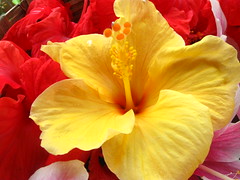
Benjamin Zander on music and passion | Video on TED.com
Benjamin Zander on music and passion | Video on TED.com
This is just superb stuff and will change the way not only how to perceive classical music but all music and life itself....It's all about 'one-buttock" playing!
This is just superb stuff and will change the way not only how to perceive classical music but all music and life itself....It's all about 'one-buttock" playing!
Friday, August 20, 2010
Ab Dilli Door Nahin – The Truth about Toilet Paper and the Commonwealth Games
“European toilet paper is made from the same material that Americans use for roofing, which is why Europeans tend to remain standing throughout soccer matches.” Dave Barry
It was when I was prattling on and on about the 4000-rupees-per-roll Commonwealth Games toilet paper scam when my mum asked me this question.
“When we Indians consider wiping our nether regions with paper the most disgusting of personal hygiene habits, why are we providing toilet paper during these games?”
Ah, I thought. Now that’s what I call a 4000-rupees-per-toilet-paperroll question and deserves careful thought and an answer.
So, I first tried this answer for size.
“Mumsie dearest, that’s how many of the firangis ablute and part of treating athithis like devas is making sure that they get to clean their fundaments in whatsoever manner they wish to and never mind how disgusting that might be.”
But that argument did not wash (pun intended) because from the look of it, a significant percentage of the sports persons attending the games aren’t likely to be wipers. (As we all know, the world is divided into two kinds of people – washers and wipers.)
Naturally, I can’t whip out the exact figure because first of all, given the way things are going, there’s no telling who may pull out at the last minute. Which could well be the Brits and/or the Aussies, who all wipers be and put together, would constitute at least a fourth of the competitors. Second, you’ll be surprised who all prefer to wipe rather than wash. For example, I thought toilet paper must have been an invention of the West but was amazed to discover that it was actually invented by the Chinese. (So, thank God, no China – think of how many more crores would go down the drain…er, toilet.)
But only as late as the 6th century.
And before that?
Well, it was really whatever was at hand, if you get my drift. Many did as we Indians do, but others preferred to wipe, using the strangest of stuff including sand (ouch), snow (brrrr), fruit skins and seashells. (Apparently Gargantua, a character in one of Rabelais’ books, recommends “the neck of a goose that is well-downed”!) And according to one expert on the matter, the Greeks used stones. I know – the mind not only boggles but having boggled, shivers and quivers at the prospect of a poor, unsuspecting bottom being scoured with….well, never mind.
In fact, toilet paper as we now it today, made its debut in America only in 1857.
And before that? Who knows? Bison droppings? Albatross gut? Leftover pizza?
But to make up for lost time, today the average American household of 4 uses about 200 pounds of toilet paper a year. Which works out to roughly 2 trees per person per year.
(So, thank God, no Americans are attending and I hope we don’t ever have to host the Olympics. I mean, add up the Chinese, the Japanese and the European contingents and our toilet paper budget will be larger than our GDP. Phew.)
It was while I was trying to work out the methodology of using seashells (ground before use and if so, how fine?) when the penny dropped.
And I was filled and flooded with a new-found respect for the poor, beleaguered Kalmadi. The man was a genius and we have misunderstood him all along
You see, the real reason for the toilet paper was to conserve water.
It had to be.
And not because we want to save-the-planet and the rest of the ecological crap.
It’s because…well, two reasons, both blindingly brilliant.
The first is because we want to have enough water for leaking through the various roofs of the various auditoriums and stadiums and maybe even the ones that don’t have roofs. (And how would we do that? Ah, just leave it all to aapro Kalmadi.)
Did someone ask “why”?
You poor thing. But I understand that not everyone can understand such dazzling planning, so lemme explain.
Laser shows – yawn. Digitally enhanced fireworks – yawner. Pyrotechnics – yawnest. Flying acrobats – puhleez. Wot I mean to say is that as far as these games go, it’s all been there and not just done that but done to death So the pressure on Kalmadi was to come up with something that has been never done before.
And he did because what could be more never-ever-before than artistically and perpetually dripping roofs?
(For those who will have difficulty noticing the drippy-drips, there will be neon signs everywhere pointing to the spots. VIP seats will be positioned directly under these spots)
The second reason?
The standard method of winning a sport is by trying to play it better than your opponent. That’s more yawn-er than even those over-hyped opening ceremonies.
But has any body tried to win by having the sports events take place on wet, slippery surfaces?
Never-ever-before.
(Even as we speak, Indian athletes are being given special training to play on these surfaces. And now you know why we are buying all that medical equipment at 6-7 times the cost.)
See? I told you, Kalmadi is…does anyone have any other word for “brilliant” or “genius” because I have used them all up.
Let the games begin….i for one can’t wait
Thursday, August 19, 2010
Shoumik the SolutionsBaba: My-Sore Weekend
Shoumik the SolutionsBaba: My-Sore Weekend
one of the funniest pieces that i have read. I not only ROFL, I almost rolled off it. Attaboy, Sollu!
one of the funniest pieces that i have read. I not only ROFL, I almost rolled off it. Attaboy, Sollu!
Subscribe to:
Posts (Atom)