Wednesday, November 13, 2013

Thoughts on Not Having Money


I’m thinking, how did the phrase “as poor as church mice” come about? 
I mean are there mice that are rich, mice that live in Bill Gates’ basement, for example. 
Or mice that hang around in the Sultan of Brunei’s godowns? 
And what is “rich” in rodent terms? 
Or “poor” for that matter? 
What do church mice not have that other mice do? 
I know we make very unkindly references about rats and their mercenary tendencies, but if I am a rat running the rat race, what would I be in the race for? Stock options in the company that makes Kraft Cheese?  (Which, I am told, is now part of the guys who makes Marlboro cigarettes…strange mix, is it not? Tobacco and cheese….ah well.) 14 Cat-stretch limos with my own personal army of Black Cat Commandos? ( Which would be befitting rodent-justice, no?)
And is that the real difference between mice and rats? (We all know the difference between mice and men. We think) Which is that mice, particularly church mice are less money-minded than rats? 
Do rodents have a Nasdaq? 
A Forbes list of the 100 richest rodents in the world
I thought these thoughts while I was thinking about not having money. 
Again, “not having money” is relative, is it not? 
For example, it would different depending on whether I am a church mouse or Mukesh Ambani. 
I am neither so, here’s what I mean when I say I don’t have money. 
I don't have a job. 
And I stopped writing - my weekly columns...oh, let me see now... let's just say " a few years ago".
I wrote a book after that but while lots of people thumped me on the back and crowed what a great book it is, I'm not Arundhati Roy. Or Jhumpa Lahiri. Or that 28-year slip of a lass who won the Booker Man Prize
Who knows, I might just be another Alice Munro when I'm 86, but that is a while away yet
So, in other words, I do not have money coming in every month. 
Or, you could say, I don’t have money. I mean I can pay my Internet bills and buy clothes and the occasional Biotique kajal and everything, but broadly speaking, I don'y have money.
It is good that while I “had money” (I used to be a Mumbai corporate rat), I did not develop any expensive habits – alcohol, Ecstasy, gigolos, diamonds, Lamborghinis …. You could say that I am a low maintenance girl.
So, I have savings and stuff, but I don’t have money.
Now not having money is a dangerous existence. 
Again, dangerous is a relative term. 
So, I’m not talking about free-falling-and-pulling-the-parachute-ripchord-when-you-are-4-feet-from-the-ground kind of danger but swimming in the deep end of the pool when you are used to doggy-paddling in the baby pool. 
It's still scary and I am terrified because till not so long along I lived a good, safe existence with not one but several safety nets under me to break my fall if I ever fell – salary, EPF, PPF, FD’s…you get my drift
So let’s see all that this state of being has done to me.
First of all, I am learning to live with insecurity and to tell you the truth, it’s not that difficult getting used to.
Actually, we all underestimate our quotient of elasticity. 
You can get used to anything. 
Either that or you die.
I think of how many million people live a few millimeters from Mumbai’s suburban  railway tracks on which trains hurtle past every deafening few minutes. I think of how many mothers have and bring up two, three, four babies while cooking-cleaning-housekeeping AND going to work 6 days of the week on the 7.39 Ladies Virar-to-Churchgate special.
So, I'm gotten used to it.
I've learn to live with envy and jealousy when I see people who were colleagues/batch-mates, even subordinates earning in a month what I earn ....er, sorry - not spend - in a year.

I've learnt to how to not to let that envy and jealousy get to me. Initially, it was a deep, burning pain. Now, mostly I don’t notice what it is.

So, you can get used to anything.

Every now and then, I remember a survivor of the 2005 tsunami who I saw on the Oprah Winfrey show. She was an old lady and she had lost everything. Money, home and her entire family of children, grandchildren. All gone. Only she survived.
Aid money had rehabilitated her with a new home but it couldn't give her back the family she had lost.
She was shifting into the house when they interviewed her and even through her tears of gratitude, she said something that I will never forget.
She said she now knew what you need to have in order to live.
Nothing.

Insecurity is a good thing.
Fear is even better.
The feeling that the bottom may fall out of everything any minute soon is a good thing.
And being “a failure” in the eyes of the world is a good thing.
When the safety nets go, the sight of chasm below trying to whoosh up and swallow you starts to clear the fog inside your head.
But the fog is thick, stubborn from years of having taken up residence and it's going to take a while for clear, blue skies

And you start looking for who you really are.

Without the phablets-that-you-change-with-every-new-phablet, the car-bigger-than-your-ego,without the friends (yeah, one of the side-effects of 'having money" is lots of friends), the vacations to I-have-no-clue-where-peoplewithmoney-go-to, the perks, the gymkhana membership.

You start looking for who you really are.

It is not easy. You are not easy to find.

But somewhere in that search, you realize that the tsunami survivor was right.
You really need very little to live. Maybe even to be happy

“Very little” because you don’t need money to have it.
In fact, no matter how much money you have, you can’t buy it.

A good night’s sleep.
A satisfactory crap every morning
A good appetite
And good health 


So….

It’s not that I don’t heave a 1000 sighs of craving when I see that ad for the Samsung Note 3 
It’s not that a thin trickle of acid doesn't sometimes burn a trail someplace inside when I see a used-to-be-my-flunkey’s 6 figure take home or COO designation

But, I weigh the options

Hassan Ali Khan, the Pune- based horse trader implicated in a high profile hawala case not so long ago has several expensive cars including a Porsche, a Bentley and a Mercedes, huge properties in Pune, Mumbai, Bangalore and Hyderabad. And 35000 crore rupees in 10 Swiss bank accounts.

He also has cardiac problems, liver trouble and diabetes and has to be regularly hospitalised. 

So, is he happy? 

I’m thinking 35000 crores sprinkled with a couple of penthouses and garnished with a Porsche and a Bentley is not such a bad thing and if you offered it to me, I wouldn't pshaw it.

But is it better than a digestion good enough to eat 3 dishes of malai-kulfi- falooda AFTER 3 plates of dahi-chat and golappa?
Or the ability to sleep a straight seven hours at night?

I dunno, really
Because I know about the kulfi-paapdichaat-7-hour sleep gig. But not the 35000 crores-Porsche-Bentley-diabetes-dickey-heart-kaput-liver one.
So, I can't say... 
I mean Mukesh Ambani can say "Poor as church mice", but does he really know what poverty is unless he has been and/or has acquaintance with the above mentioned rodent species? 
(Of course, Rahul Gandhi will tell you that even with church mice, poverty is a state of mind and they could easily be tootling around in rodent-Bentleys, munching mice-caviar and sipping musaka-champagne, if they just put their minds to it...)
Am I saying then, that I want to experience 35000 crores-Porsche-Bentley-penthouse-diabetes-dickey-heart-kaput- liver life before i answer?
Yes.
But minus the kaput liver and dickey heart. 
So that, whenever fancy strikes me and the penthouse bores me, I can rush off in my Porrsche to eat  3 dishes of malai-kulfi- falooda etc.etc. 
And not feel a twinge
Or missing a beat on my 8-hour kipper through a rain-washed night.
That's true wealth.


Friday, July 19, 2013

Mother Tongue


"I have become a queer mixture of the East and the West, out of place everywhere, at home nowhere." Jawaharlal Nehru
It’s an old horse, mostly flogged by politicians to win votes or voters’ brownie points. The debate about English versus Indian languages as the medium of instruction in our schools. And I write today conscious about the fact that “convent-educated” continues to be one of the most the coveted attributes of a prospective bride, next only to “fair”. That the “right” English accent can still open many doors that no “desi” accent can including getting you that fancy-salary paying call center job. That without the knowledge of English, higher education as it exists today will be impossible. That I myself am a product of such an education; reading, writing and doing all of my conscious thought in English. I also write wondering why this debate should exist at all. Because, for one, isn’t it obvious that children should be taught to use their minds and their hearts in their own mother tongue? Secondly, in a country where even the “anghuta-chaap” can fluently speak at least 2 languages, why should it not possible to have multi lingual education? And in case it isn’t obvious, too many research studies conducted over the years clearly show that bilingual children perform better in school when the school effectively teaches the mother tongue.
But since the debate exists, let’s get that out of the way first. As you must have guessed by now, I’m throwing in my lot with the Indian languages. So, am I saying that the medium of instruction in our schools should be in an Indian language? Ultimately and primarily – yes. And before everyone gasps in disgusted astonishment, it won’t do harm to just look around at all the world around us. Every single “developed” economy – and let’s not go too far away and stick to the Asian tigers – speaks, reads and writes in its own native tongue. And for the ones muttering about how difficult it is to undo centuries of British colonization that branded the English language as the superior-sahib’s language into the psyche of the nation, and how it’s virtually impossible to have one official language in a country which speaks 14 languages and over 3000 dialects, let me remind them that Singapore, Malaysia and Hong Kong were once British colonies. And Singapore has not 1 but 4 official languages of which one is Tamil. Iincidentally, the name Singapore was derived from the Sanskrit simha (lion) and pura (city).
Besides, some of the greatest Indian minds that shaped not only modern India but also the world were people who had their primary education in their mother tongue and later went on to become proficient in English. I could reel off a long and impressive list but perhaps just one name will do the trick. Mohandas Karamchand Gandhi.
Up to the age of 12 all the knowledge I gained was through Gujarati, my mother tongue. Then I entered a high school…. Everything had to be learnt through English. The tyranny of English was so great that even Sanskrit or Persian had to be learnt through English, not through the mother tongue. And let me confess to the reader that in spite of all my love for the mother tongue, I do not to this day know the Gujarati equivalents of the technical terms of Geometry, Algebra and the like. I know now that what I took four years to learn of Arithmetic, Algebra, Chemistry and Astronomy, I should have learnt easily in one year, if I had not to learn them through English but Gujarati.… I must not be understood to decry English or its noble literature. The columns of HARIJAN are sufficient evidence of my love of English. But….India has to flourish in her own climate, and scenery, and her own literature. We and our children must build on our own heritage. If we borrow another, we impoverish our own. We can never grow on foreign victuals. I find daily proof of the increasing and continuing wrong being done to the millions by our false de-indianizing education……” Gandhi writing  in HARIJAN, July 1938
Now let me get to the points that I really want to make.
First, that irrespective of what is the “medium” of instruction in school (and we can’t change the system overnight), the responsibility of teaching our children our mother tongue rests first with us parents. And I don’t mean teaching them to just be able to read and write it. We mistake language to be just an alphabet, a script, a conglomeration of words that is a conduit for communication and information. When in fact, it is so much, much more beyond that. It is literature and music and theatre. It is our great epics and folklore. Listen to a tale from the Panchatantra in an Indian language and then listen to it in English. It is like eating a dosa or a chapatti with a knife and fork.  It is with what we feel the summer heat sear our skin, smell the rain’s first kiss on the earth, taste a mango, hear Krishna’s flute, see the colour of his beautiful skin reflected in the night sky. It is our mother’s voice softly crooning us to sleep. It carries in it the fragrance of this land. It is the mirror in which we see and recognize who we are, defined not just by this lifetime but the thousands of lifetimes of our ancestors.  It is as much who we are as is the colour of eyes that we inherited from a grandmother or the walk that we inherited an uncle. So how can we leave the responsibility of introducing our children to themselves to someone else?
Second, I plead the case for our mother tongues for one other very important reason. Because they are some of the most musical, most beautiful, most evocative, richest languages in the world, not to mention the most ancient. How can we not give this precious gift to our children? I wish I could spout passages of prose or poetry to make my point, but I am barely literate, only being able to speak but not read or write my mother tongue and my Hindi comes largely from Hindi films and Hindi film songs. (Which isn’t all that bad because fortunately they come from writers like Gulzar, Kaifi Azmi, Sahir Ludhinavi, Majrooh Sultanpuri and Rajinder Kishan.)  And dim though it is, even by that flickering flame, what I see is spectacular, breathtaking, enthralling. Languages vast and generous like the river Ganges in where there are a hundred choices to describe one thing, each word meaning the same yet not the same. Aakash, aasman, amber, gagan, digh is all “sky”, yet each have a different shade of meaning. Shyam is evening but also Krishna and his beautiful colour. “Piya ” and “saajan” is lover, but the great bhakti poets of our land – Meerabai, Kabir and Surdas – also used it to mean God. Words so concentrated and packed with meaning and expression that in just one word, you can tell a life story, describe the universe. Perhaps that is why on the one hand, we have sahasranamas for every god and on the other just…..“Om”. And perhaps that is why the Sanskrit lexicon is is called Amar Kosh – eternal treasury.
Can you think of a more beautiful way of saying “mother” than “janani”? And can you find an equivalent word in English that is an adequate translation? For that matter, can you translate “Man tadapata hari darshan ko aaj”? Have you ever wondered why English subtitles in Indian films are so ridiculous? How, for example do you translate “jeevan se bhari teri aanken majboor karain jeene ke liye”? Or “chaudavin ka chand ho ya aftab ho”?  How would you explain “sringaar rasa” to somebody who knows only English? Or what Tulsi Das meant when he said, “Tumaka chalat Ramachandra, baaje paijaniya”? Or Meera Bai when she pleaded “Hari tum haro jan ke peed…”? Or  Purandaradasa when he begged, “Karuniso ranga karuniso, Krishna karuniso….”?

Many, many years ago, in my penultimate year in school, a wondrous thing happened to me. Her name was Sister David and she was my English Literature teacher. I still remember the class and the poets – Robert Frost and T S Eliot and William Blake – and the poems.
“Earth’s the right place for love:
I don’t know where it is likely to go better….”
And I still have that poetry book. Because that day I fell in madly, deeply and irrevocably in love with the English language, a love has not faded to this day. And all that preeti, pyaar, prem, lagan, mohabbat for English – even though today I write against it – started from the wonderful introduction that I had to its great literature and poetry. It led me to its songs and cinema and theatre. I wish I had met such a teacher of Kannada or Hindi Literature. I wish that there could be such a teacher of Indian language in every school.
Perhaps a vain hope because thousands of “English-medium” institutions are sprouting up all over the country even as we speak. Sadly, given the quality of the English taught in a majority of them, most of these children will be both inarticulate and for all purposes illiterate in both languages. Look at the average advertising slogan and you will see how dangerously close we are to that.
Their vocabulary in the mother tongue is so limited that they cannot always finish their speech without having recourse to English words and even sentences.” Gandhiji wrote this almost 70 years ago but it applies to most of the current generation of Hindi film stars. And many VJ’s and TV show hostesses speak Hindi with an accent that the even the average Angrez baddie in a Hindi film would be ashamed to speak in.
Yet, a century ago, there were Indians with a different vision of things. Tagore founded Shantiniketan, Rukmini Arundale Kalakshetra and it is said that the great physicist, S. N. Bose fought for the introduction of Bengali as the medium of instruction and as Professor in Calcutta University in 1945, taught physics to the postgraduate students in Bengali.
You see, it’s really very simple. How can we have self-respect when we don’t know who we are? How can we raise generations of proud, confident Indians if they don’t know who they are, who cannot don’t read their own poetry and song, who haven’t been touched by the magic of their mother’s tongue? Who know their Mahabharata and Ramayana through assembly line serialization on television and English translations, who  never fallen in love with Jayadeva’s Geet Govindam or Bhartrihari’s fabulous love poetry? Who have never seen a Yakshagana performance? It is not enough to declare Tamil and Kannada and Sanskrit as “classical” languages. They must roll off our tongues as easily as our mother’s name. In other words, they must truly become our mother tongues.
I end on a light-hearted note, but one that illustrates the exquisite subtlety of our languages. One of my mother’s closest friends was a Punjabi lady who was eager to make a good impression on her Kannadiga boss. So, after much tutoring from my mother, she went off to work one morning armed with a complete, freshly polished Kannada sentence. When her boss came in, she went up to him and proudly declared, “Neenu beku.” Translation :  I want you. All that the poor lady wanted to ask for was water or ‘neeru” which slipped just by one syllable and became “neenu” - you. My mother says that it took the boss a long while to recover….

                                                *******


Thursday, July 18, 2013

I think and write in English but it is my eternal regret that I don't in Kannada...A cornucopia of verbs

I am fascinated by the cornucopia of avatars of verbs in Indian languages and how, often by using a word that's just a syllable-long, we have narrated the exact (and sometimes entire) relationship with the person being addressed
For example 'ba'. In Kannada, it means 'come'. (Like 'aa' in Hindi)
But it doesn't stop there. When you say 'ba', it means that you are addressing a person who is familiar to you - could a friend or family member. Or stranger but a person younger than you.
Now, let's add another syllable to 'ba' - 'nni' = banni. With that you have added respect and/or politeness to your summons; in other words, we now know that you are addressing someone older/unfamiliar/someone who you respect - it could be one or more of those things. 
But these are unisex verbs and they don't tell us the gender of the person you are talking to. 
So, let's add some other syllable to 'baa'. 'Ro'. So, 'baaro'.
Now we know you are talking to a male - and someone whom you are really , really familiar with. Perhaps not quite the breeds-rabbits kind of familiarity (though with time and enough baaro's, it might get there), but raised by several degrees higher than just 'baa'. So you could be talking to a brother/son/friend/lover - sometimes even a husband!
(The reason for that last exclamation mark is because it is still the practice in the "hinterland" as we superciliously tend to call it, to not take the husband's and to address him in "bahuvachana" like 'banni - Hindi equivalent is 'aaiye'. But like so much else, and with the help of judiciously timed TV serials, it's all changing. The salwar-kameez is nudging out the 'seere' and patidevs are often just "baaro'!)
Now, if you change 'ro' to 're', as in 'baare', we know you are talking to a female, but with whom you share the same degree of familiarity as 'baaro' - sister/friend/sister-in-law. And of course, wife. (No exclamation mark needed this time because this practice is as old as the idli n the dosai...)
The only exception where 'baaro' is used unisexually is with children. When I first came to live in Mysore, I noticed what then seemed strange, but now rather endearing practice of calling daughters also that way...'baaro'
The best way to understand how this treasury of verb avatars work is to watch a fight, especially a you-bumped-my-bumper-you-banged-my-er-fender street fight.
The combatants starts off with 'banni', then as tempers rise and accusations are hurled, it becomes 'ba', and finally, just before the warring parties come to blows and/or are hauled off to the nearest police station, the air is thick with references to your dubious ancestry and 'baaro's'....
I think and write in English but it is my eternal regret that I don't in Kannada...
I cannot end without sharing that most famous use of the verb 'baaro' - Purandaradasa's "Krishna Ni Begane Baaro..."
http://youtu.be/XLwcrrVrOjw

Wednesday, July 17, 2013

Poem - A cucumber in December

A cucumber
In December
Said 
I remember
I remember

Chilling out, 
Lying about
In a
Cool, pink gazpacho
Cuddling a tomato

I remember

T'was summer...
I'd murmur
Songs 
And Wander
Clad only in coriander

I remember

The thrumming thrill 
Of a chill
Chilli
Tickling my knee
In a lemony sea

Then when, I pray
ask, did May
Become
This mint-numbing, freezing
sneeze-wheezing
December?

I don't remember....

Tuesday, July 09, 2013

What does the hibiscus flower have to do with bhendi?


Bhendi.
Lady's fingers.
Or okra, as the Americans call it. The word "okra" is of African origin and means "lady's fingers" in Igbo, a language spoken in Nigeria.
Botanical name : Hibiscus esculentus.
You're wondering about the word "hibiscus, are you not? Well, that is because this vegetable is a member of the mallow family of which the hibiscus is also a member.

Now, there is another indication that the bhendi and the hibiscus are related. Crush the petals of a hibiscus flower between your fingers and they  will be coated with the  a kind of slippery, gooey substance similar to that which comes out when you slice a bhendi.
It's also what makes a lot of people hate this vegetable but this is what makes it one vegetable that should often be part of your diet. You see, the gooey-guck is mucilage, a kind of dietary fibre vital for good health and to prevent or manage many diseases.
And this is how.
For one, like all dietary fibre, mucilage acts as a sponge, absorbing blood sugar and thus lowering it. That's critical to help prevent diabetes and also manage it.
For another, it is this very sponge-like property makes mucilage a great purifier, ridding irritated, inflamed tissues in the body of toxins, allergens etc, especially those that inflame and irritate stomachs and intestines. Also, the gut flora (good bacteria) that live in the our digestive tract and without which many digestive processes would be very difficult, love to feed off mucilage.
Finally, fibre of any kind is a wonderful mover and shaker - of our bowels, preventing constipation etc., etc. And soluble fibre - like mucilage - is particularly beneficial because it is not harsh like insoluble fibre (wheat bran for example) and so nudges er, things along firmly but gently...if you get my drift!
That's all very well, you're thinking, but what to do about the gooey-guck?
Well, that's why I started writing this in the first place.
One option is to fry the bhendis as we do in bhajis. (Some folks even deep-fry their bhendis!) But there is a equally delicious but morehealthy option that I learnt from my mother. And it is to roast them.
And here's how you do it...


Chop the bhendis. Now take a thick pan or kadai and ......


on a low heat, gently roast the bhendis till they char slightly, lose they firmness and are more than half-cooked


Now add them to pre-cooked dal (tuar works best) and make your favourite dal or sambar!

Enjoy!
Incidentally, bhendis are also a good source vitamin C, many of the B vitamins and antioxidants....

Friday, July 05, 2013

The Man Who Loved Aliases!


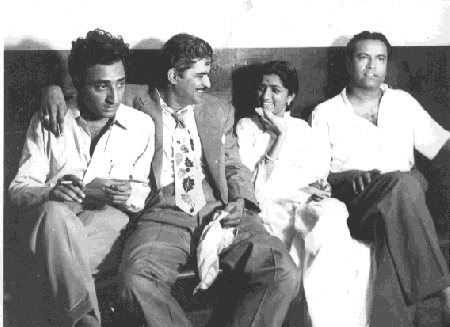
C. Ramachandra - one of the greatest music directors in Hindi cinema.  (Just to jog your memory - Shola jo bhadke dil mera dhadke, O chand jahan wo jaye and Shaam Dhale Khidki Tale)  I say Hindi cinema because that's where he did most of his work, but he also composed for Marathi, Telugu and Tamil films including this famous song  for SS Vasan's blockbuster -  Vanjikottai Valiban!)
I just discovered that he was influenced by Benny Goodman! But what I know is that he's a fabulous singer, singing as Ram Chitalkar (he acted and sang Marathi films by that name and the "C" in "C Ramachandra stands for "Chitalkar"). One of his most famous songs is a duet with Lataji - Kitna Haseen Hai Mausam - in the film AZAD for which he was also the music director. Another of his great hits is Mohabbat aisi dhadkan hai, originally sing by Lataji for the film Anarkali, but just listen to him sing it here, 28 years after he first composed it! C.Ramchandra Live at BBC Studios,1981
But a lot of his really delightful songs (including one in Punjabi)  are rarely heard and mostly unknown. So, if you want to listen to C.Ramachandra alias Ram Chitalkar as the singer, visit this site
http://chitalkar.tripod.com/
And if you want to know more about more about this multi-talented musician with a penchant for aliases, this is a good starting point! http://www.anmolfankaar.com/features/blog/107-c-ramchandra-and-his-autobiography.html


Tuesday, July 02, 2013

First Blood

"We were the first" 
to show you 
bomb blasts, 
body parts
scams bursting
dams

"We were the first"
to cry "Shame!"
then hold candlelight marches
as we told you
her name
("Shall we call her 'rape victim?'" No! 'Survivor'." "No. The One who knows no fear' because she's dead now..."

"We were the first"
to dangle this juicy
scandal
and bait with that
breaking news
that was often nothing but a 'phus'...
("Warning : the next few images may be disturbing, shocking, licking-you-chops-disgusting..."

As you watch
Drool-drugged
Fool,
Panting, "More! gimme-gimme-gimme more...
More bombs, wars, floods, blood
More terror, rape, plunder, the pounding thunder of
More...."news"

Friday, June 28, 2013

Watermelons in winter...


This morning, a street vendor passed by selling mangoes and 'avarekai'. Was a time when mangoes spelt summertime and 'avarekai' (vaal in Gujarati) was the special vegetable that heralded the onset winter. My mother says that farmers offered the first crop of this gorgeous bean to the Maharajah during Dussera. 
Now, we have avarekai all year round and watermelons in winter....
I mourn the passing of the tradition when fruits and vegetables and flowers were our almanacs and calendars...
"Avarekkai"

Thursday, June 27, 2013

Burnt- brown....

Burnt-brown
Bitter-sweet
Rock-hard
Crumbly-ness
That melts
When you
Touch and rub
And let lie on 
your tongue
and swirl
in bitter-sweet circles
in your mouth
in your head
a jaggery of memories....

Wednesday, June 26, 2013

Go Bananas....

Did you know that the banana can help cure high blood pressure?

Scientists at the Kasturba Medical College in Manipal, Karnataka conducted a study of six popular South Indian varieties of ripe bananas. Their findings showed that the banana inhibits the action of ACE, the enzyme that is responsible for producing Angiotensin-2, which in turn constricts blood vessels and causes high blood pressure. They also found that people who consumed a couple of bananas a day for just a week recorded an amazing 10 per cent fall in blood pressure!
The banana is also one of the best sources of potassium.
Incidentally, one of the best ways to tackle a hangover is with a banana! Have two glasses of water and a banana just before going to bed, or a banana milkshake sweetened with honey – take your pick. Curiously enough, though, in East Africa, banana is used to make beer!
And this is my favourite banana receipe!

Mustardy Curd and Banana Raita (serves 4)

2 medium-sized overripe bananas

3 cups curd, whipped smooth
1 ½ teaspoons mustard seeds ground coarsely
I small chilli chopped
1 tablespoon fresh coriander, chopped
Salt to taste

Peel the bananas and roughly smash them with your fingers so that you get a consistency of paste with chunks of banana in it. Add them to the whipped curd along with the ground mustard, salt, chili and fresh coriander. Chill for about an hour. Serve either with a main meal or just by itself with chappatis – makes a great summer lunch!
VARIATION: Substitute banana with cucumber – same quantity if medium-sized. Grate the cucumber and add to the curd along with the rest of the ingredients.


Monday, June 03, 2013

The cabbage was so pretty, I sent the turmeric away....


This is a gloriously simple cabbage bhaji (poriyal in Tamil, palya in Kannada) and you can make it with any other vegetable
1 small cabbage finely chopped
1 green chili, chopped
1 tablespoon shredded fresh coconut
11/2  tablespoon oil
3/4 teaspoon mustard seeds
1/2 teaspoon jeera
1/2 dried red chili, broken into bits
4-6 curry leaves
Pinch of hing
Salt to taste

Garnish - finely chopped fresh coriander
Heat the oil, add red chili pieces, mustard seeds and after a few seconds the jeera and hing. When the mustard starts spluttering, add the curry leaves and as they start to brown add the cabbage and the chopped green chilies. Saute over high heat till the cabbage starts to turn transparent. (You need to turn the cabbage constantly so that it doesn't burn.) Now add the shredded coconut, salt. Stir well, lower the heat and cover the pan. The cabbage should steam in its own moisture but check after a few minutes and add a dash of water if necessary. When the cabbage is cooked, add the fresh coriander, stir for a few seconds and remove from heat. Serve with chappati/ rice/dal etc etc

TIP. When I was on a diet, I'd add cold cooked rice to this bhaji - just about 2 tablespoons - and it make make a delicious, low-cal "pulao" that worked specially well as packed lunch!

Sunday, June 02, 2013

Why Popeye is so right about spinach...

Palak Raita 
2 small bunches of palak
250 gms curd, whipped to a creamy smoothness

Seasoning
Freshly ground pepper
Salt
Chopped fresh coriander

Tempering
2 teaspoons oil
3/4 teaspoon jeera
1/2 broken dried red chili
Pinch of hing

Wash m cook whole palak leaves in a little water (about 2 tablespoons per bunch). Don't cover the pan or the palak will lose its lovely colour. Allow to cool and then chop. Add to whipped curd along with salt n pepper. Heat oil, add jeera, hing, red chili. When the jeera starts to darken, remove from heat and add to the raita. Stir in the chopped coriander Garnish: fresh coriander. Chill and serve...with anything, even hot, buttered toast!
TIP : You can vary the seasoning and select your favourite : roasted jeera powder, chat masala, freshly ground mustard etc., etc

Saturday, May 11, 2013

Friday, May 03, 2013

The Road

I walk
The road
Ahead is straight
Familiar, well-trodden
So I think...

I walk
The corners
Crouch in the shadows
Waiting

Sunday, April 28, 2013

I'm worried about the worm...

I'm worried about the worm
What if it won't turn
What if the worm is dead
(Long Live the Worm)
I'm worried about the worm...

Saturday, April 27, 2013

Words – Waiting for the rains

Words 

My lovers
Unfaithful, maddening lovers
Taunting me with
How sweetly they lay, now lie with another
Weaving immortal magic

Words
My gorgeous tyrants
Locking me up in a prison
That for some reason
I never want to leave

Words
Doors.  Mirrors?
No, doors – I know they are doors
That I know open out
To wondrous things
(Because once they did)
But for which now, I can’t seem to find
The keys

Words
 Once a surge. An ecstatic rush.
Now a trickle. A drought.
 I trace the parched cracks
And I wait.
It will rain.
(It must, must it not?)

Words
Still. Crouching. Surly.
Taut with unleashed lightning.
Waiting for their master
“Not you,” they whisper cruelly.
“Not you. You are just a stable hand

I retreat
And wait
For the rains

Tuesday, April 09, 2013

Bag it - In Tribute to Maggie Thatcher


 (Reviving an old MId-Day column to pay tribute to the Iron Lady)

Last week, newsworthiness-wise, it was a toss-up between Prannoy Roy and Margaret Thatcher. It would've been journalistically propah, I know, to teeth-gnash about the decoding of the human genome. But I just barely got past figuring out that "genome" is the result of the commingling of  "gene" and "chromosome", that it has nothing whatsoever to do with gnomes and is the "human alphabet" that will let me figure out why I don't look like an Aishwarya Rai and she does. That is if I learn to spell in a language that has 3.2 million alphabets - at last count.
So I think I'll give genome reading a skip, weakly applauding instead in the sidelines at the awesome possibilities it presents in finding cures for heart disease and cancer and worrying about the equally awesome, though not as noble ones of - how do they say it in cricket - gene fixing?
Getting back to the newsmaker of the week. Which Ifirst thought should be Prannoy Roy, relaunched last Monday on the 9 o'clocks all across India and 53 other countries. And I must say the new, improved Roy is even better than before. Crisper, spiffier, with 88.9% more panache and tele-presence than any other television news personality that I've seen in recent times, including the Beeb's Tim Sebastian. (I know.Got to keep the drool down, the dribbling sound can get a bit distracting.)
But truly, the beard's better seasoned with salt and pepper, the suit more darkly expensive and as creaseless as Roy's tele-prompted news reading. And his mastery over the thrust and parry of tele-repartee is as silkily merciless as ever. The victim that night was the hapless Minister of State for Telecommunications, being quizzed by Roy about his Ministry's stance over the proposed corporatization of the DoT, given the telecom employees' threat to strike. Just as the minister was about to speak, the satellite (telecommunications?) link snapped. The gods, it seemed, had sponsored this relaunch. "Oh, looks like the telecom strike is on already!" chuckled a delighted Roy. When the link was re-established, Roy first let the minister hang himself on his own rambling harangue that was so incoherent and confused (helped by a Bengali accent thick enough to cut into 2" slabs) that it wouldn't have mattered if he'd been speaking on the silting of the Sunderbans. And just when we were all ready to keel over and switch channels, Roy sliced in, thanked the minister profusely, apologised even more profusely for the break in the tele-link, hoping that it wasn't – hold your breath - the minister's fault. Who missed the point completely, but 56 million viewers in 53 countries didn't.
Then there was Maggie Thatcher. Or rather, Maggie's Handbag. Now all well-bred gentlemen know that there are 2 things about a lady that you never pry into. Her age and her handbag, the latter containing everything you ever wanted to know about women but never will, thank God. A British museum, holding an exhibition on women's handbags called "Everything but the Kitchen Sink", commissioned a research to peek into them and found that they contained an average of 14 items, going up to a maximum of 44. Everything from sheep's milk powder to - sometimes in Maggie's case – the Queen's latest speech. We don't know what else was in Maggie's bag. (The Queen's, we know, never has money. What would she have to pay for anyway? Taxi fare?) But Maggie wielded it with such potency when she was in power that it felled political foes, won a war and helped make a greengrocer's daughter into BaronessThatcher and Britain's longest continually serving prime minister (1979-90) since Asquith.
Maggie's handbag became a symbol of the invincible, cast-iron spirit of a woman who, as the BBC put it, thought she was Britannia. And the word "handbagging" entered the Oxford English Dictionary to mean, "to treat (a person, ideas, etc.) ruthlessly and insensitively." So, Maggie's handbag has it this week. And if you want to be empowered by it, the bag, a black Ferragamo, is being auctioned - online some say, at www.handbag.com from today till July 13th.  The proceeds of course will be donated to charity. Which one? Breast cancer.
Obviously.

Friday, April 05, 2013

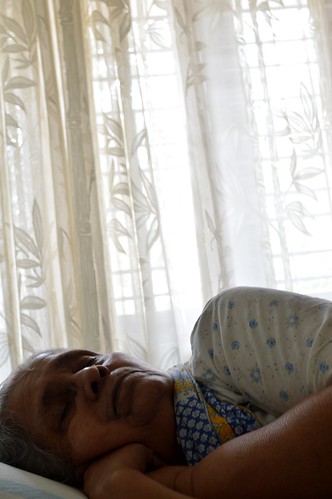
mum

DSC_0009 by ratnarajaiah
DSC_0009, a photo by ratnarajaiah on Flickr.

mum

DSC_0009 by ratnarajaiah
DSC_0009, a photo by ratnarajaiah on Flickr.

Friday, March 29, 2013

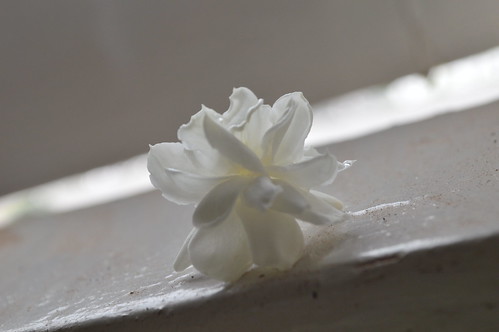
mallige

mallige by ratnarajaiah
mallige, a photo by ratnarajaiah on Flickr.